

Have you ever wondered why you sometimes can’t remember the name of someone you’ve known for 10 years, or why it’s so hard to get out of bed in the morning? The answer lies in your brain, the most complex and amazing organ in the universe. In this article, we’ll take a look at how the human brain really works and share 20 scientific facts that could completely change your outlook on life.
Have you ever wondered why you sometimes can’t remember the name of someone you’ve known for 10 years, or why it’s so hard to get out of bed in the morning? The answer lies in your brain, the most complex and amazing organ in the universe. In this article, we’ll take a look at how the human brain really works and share 20 scientific facts that can completely change the way you feel about yourself, your emotions, and your abilities.
Why it matters: Understanding how your brain works can help you not only manage your emotions better, but also boost your productivity, improve your memory, and even build happier relationships—all without pills or expensive courses.
How the brain works in simple language
The human brain weighs only 1.3–1.5 kg, but consumes 20% of the body’s total energy (that’s why they say that “what we eat is the result of how we think”, since at least 20% of your breakfast of scrambled eggs or yogurt will ensure high-quality brain function). It consists of billions of neurons that constantly communicate with each other, having neural connections (these are the road threads of communication between them).
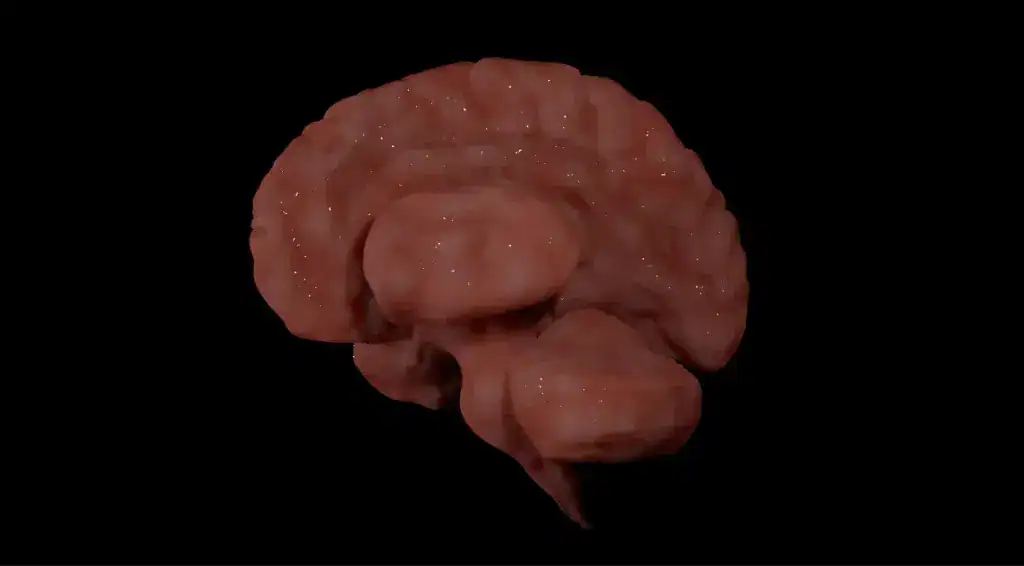
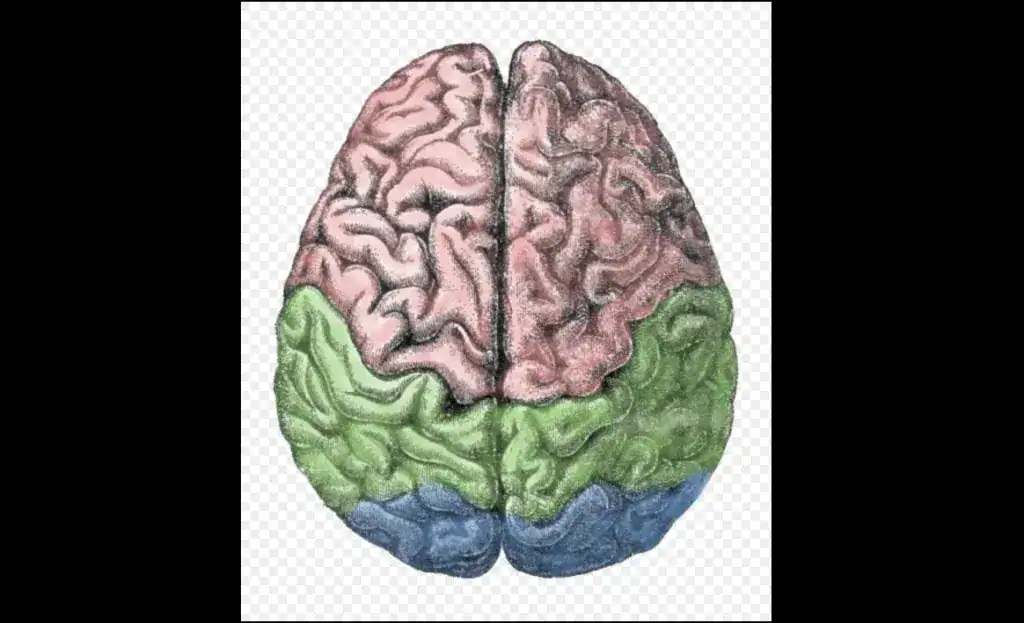
The main parts of the brain and their functions:
- The cerebral cortex (upper part) is the “command center.” It is responsible for thinking, language, consciousness, and creativity.
- The limbic system is the “emotional brain.” It is where emotions, motivation, and memory are formed.
- The cerebellum (inner part) is responsible for coordination of movements and balance.
- Brainstem — controls breathing, heartbeat, and other vital processes.
The brain is divided into two hemispheres: the left is responsible for logic and language, the right for creativity and emotions. But it’s a myth that someone’s right hemisphere is always working, which is why they’re so creative; in fact, both hemispheres of the brain are constantly working together.
20 most interesting scientific facts about the brain
1. The brain does not feel pain.
There are no nerve endings there that give signals about (hot, cold, pain, etc.), which is why during brain surgery the patient can be conscious and not feel anything.
2. You use 100% of your brain.
There is a persistent myth that we only use our brains at “10%” of their capabilities, but this is a myth that has been completely debunked by scientists . The brain works at 100%, it’s just that different areas are active at different times.
Scientific sources:
- Harvard Health Publishing (Harvard Medical School) → “You don’t say? Brain space” (2021 article) Link: https://www.health.harvard.edu/mind-and-mood/you-dont-say-brain-space
3. The brain can generate new neurons throughout life
Although it is still a common belief in our society that neurons in the brain die irreversibly during arguments or alcohol or tobacco use and are never restored, this is not true. This phenomenon is called neurogenesis, when the brain generates new neural connections.
4. When you learn something new (a language, another country’s culture, etc.), the brain physically changes.
As a result of the learning process, new connections between neurons are formed in a person. This has a positive effect on future thinking.
5. The brain does not distinguish reality from vivid imagination

Everyone has long known about such a phenomenon as optical illusion, which proves that visualization helps to achieve goals.
6. Stress literally shrinks the volume of the hippocampus
These are the areas responsible for our memory. Constant stress negatively affects the ability to remember small details and other important events.
7. The brain loves routine
The brain never stops or rests for a minute, even in the spring. That’s why it’s so hard for many to break bad habits.
8. During sleep, the brain “washes out” toxins
Yes, during sleep, the entire flow of information received during the day, or knowledge accumulated during the day, is literally filtered.
9. Women’s and men’s brains work differently
That’s why women are better at recognizing emotions, while men are better at navigating space. Scientists have found significant differences in the “connectome” (connections between different parts of the brain). The male brain has stronger connections within each hemisphere, while the female brain has stronger connections between the hemispheres. Link to the scientific study: https://www.pnas.org/doi/10.1073/pnas.1316909110
10. Musical instruments literally change the brain structure of musicians.
The explanation is still the same: our brain’s thirst for the new, perceiving the world through sounds and tuning in to the rhythm of musical instruments.
11. The brain uses more energy when you lie down and do nothing than when you read a complex text.
When you just lie down and “rest,” your brain is actively working in its “default” mode — processing memories, planning for the future, analyzing itself, which takes a lot of energy to reproduce and analyze on its own. Reading complex text, on the contrary, uses more local areas, analyzing and visualizing the text presented, so the overall energy consumption is often lower.
12. Love activates the same areas of the brain as cocaine
When a person falls in love, dopamine is released in the brain in a large amount in the adjacent nuclear region (nucleus accumbens) – this is the same “reward system” that cocaine stimulates in drug addicts (only remember that drugs are evil that kills you, unlike love, which inspires and lifts you to heaven). That is why falling in love causes euphoria, addiction and strong motivation.
13. The brain can “rewrite” itself — it’s called neuroplasticity
Neuroplasticity is the brain’s ability to form new neural connections and rewire existing ones. This is what allows us as humans (living beings) to learn new things at any age, recover from a stroke, or change habits.
14. People with high intelligence are more likely to be distracted
High intelligence is often associated with greater brain activity in the same “default” mode when we are just lying on the couch. Such a highly intelligent brain constantly generates many ideas and associations, which makes it harder for a person to concentrate on one task.
15. The brain does not like multitasking.
In reality, he simply switches between tasks quickly and gets tired. The brain is physically unable to perform several complex tasks at once, which causes the need to constantly switch. He quickly switches attention from one task to another. Each switch costs energy and time, so productivity drops and fatigue increases.
16. Laughter is good for the brain
Laughter improves blood circulation and releases endorphins. During laughter, the parasympathetic nervous system is activated, blood flow to the brain improves, cortisol (the stress hormone) levels decrease, and endorphins are released—natural “painkillers” and “antidepressants.”
17. Meditation for 8 weeks increases gray matter in areas responsible for attention
Research from Harvard Medical School has shown that regular meditation (8 weeks of 20–30 minutes) increases the thickness of the cortex in the prefrontal cortex and hippocampus — areas responsible for attention, memory, and emotion regulation.
Link to scientific source: https://www.ncbi.nlm.nih.gov/pmc/articles/PMC3004979/
18. The brain remembers emotionally charged events much better than neutral ones.
Everyone has probably experienced this fact. Emotionally significant events (such as joy, fear, shame) activate the amygdala, which “marks” memories as important. That’s why we remember weddings, arguments, or traumatic moments much better than ordinary workdays.
19. Lack of sleep literally “kills” neurons
Chronic sleep deprivation disrupts neurogenesis and leads to neuronal death in the hippocampus. Studies show that after just a few nights of sleep deprivation, the brain functions worse, and recovery can take weeks.
20. The brain continues to develop up to and after age 25
They say a person is fully formed and growing by the age of 25. The prefrontal cortex (the area responsible for decision-making, impulse control, and planning) matures last — around the age of 23–25. Some forms of neuroplasticity persist throughout life.
How does our brain affect daily life?
Our brain controls literally everything from what you can see and feel to whether you get out of bed in the morning, to how we usually tend to ignore how we breathe and move during conflict. It determines your habits, emotions, decisions, and even how happy you are.
Myths about the brain that Ukrainians still believe in
- “After 25 years, the brain stops developing” is not true, the brain can maintain plasticity until the end of life.
- “The left hemispheres are logical, the right hemispheres are creative” is a simplification, and besides, they are not something separate, as they work in pairs and complement each other.
- “Alcohol kills brain cells” — In fact, this is not entirely accurate. Alcohol does not destroy neurons directly in moderate doses. However, with regular and excessive use, it causes brain atrophy, inflammation, impaired formation of new neurons, and the toxic effect of acetaldehyde, a breakdown product of alcohol. That is why chronic alcoholism leads to a real reduction in brain tissue.
- “We only use 10% of our brain” is a classic myth; the brain works at full capacity all the time, it just distributes the load differently.
How to improve brain function?
Firstly, the most beneficial stimulus for the brain is regular healthy sleep – this is the most important factor that has a very direct and important impact on our brain.
Secondly, proper, healthy and balanced nutrition – the brain loves omega-3, antioxidants, and B vitamins.
Thirdly, regular physical activity is the best “doping” for the brain.
Brain training — new knowledge, special logic exercises, crossword puzzles, memorization, etc. are very useful for developing our brain.
Practical exercises and techniques for the brain
- “Fingers in a fist” technique – To do this, you need to slowly clench your fingers into a fist while inhaling, while the thumb should be bent inward.
- The Brain Shower Exercise – This is an imitation of performing everyday activities such as taking a shower or washing your face with your eyes closed. This forces the brain to use tactile sensations and imagination rather than direct vision, activating new areas of the cerebral cortex.
- Neuroplasticity exercises – learning language, poetry, interesting facts, etc.
What harms the brain?
What harms the brain is actually what causes its degradation. When, instead of learning new things and developing in existing areas, a person simply consumes hours of entertainment content every day. Therefore, our brain is adversely affected by:
- Uncontrolled, regular screening of social media for quick dopamine (entertainment content), which has no practical benefit for the development of your brain.
- Dehydration, that is, insufficient water in the body.
- Stress.
- Lack of physical activity.
- Lagging progress in development and learning.
Conclusion
Your brain is not a static organ, but a living, plastic system that can and should be constantly trained and improved. Start small — and in a few weeks you will feel the difference. In order to develop your brain and make it work better: sleep 7–9 hours a day, move actively for at least 30 minutes a day, eat fatty fish and nuts, do not forget to learn something new and meditate.
How the human brain works is not a dry science, but a feature reflecting our “lifestyle”, if you lead an active lifestyle, learn new things, eat right and have healthy sleep, your brain will work without “glitches” to your benefit. Save this article and start changing your brain today.
Subscribe to daily Science and Health notifications on Viber by clicking on this text!