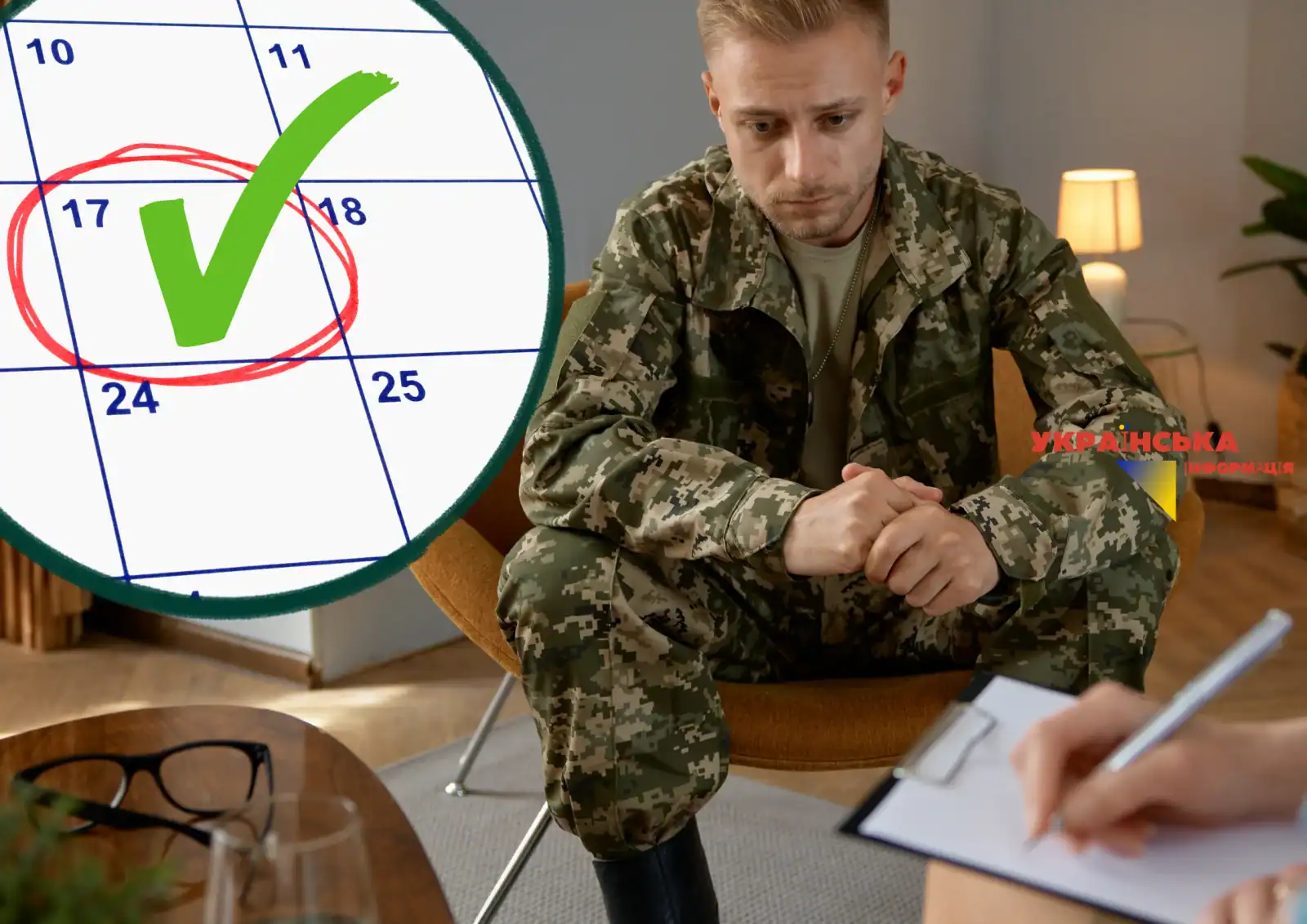
The issue of clear terms of service for mobilized military personnel has been particularly acute in society recently, as a full-scale war has been going on for the fourth year in a row, and here is another attempt to regulate this issue at the legislative level.
Material updated on May 14, 2026
The bill proposing that deputies adopt a new law entitled “On Mandatory Rotation and Maximum Service Terms in Wartime Conditions”, which was initiated by the People’s Deputy from the “Servants of the People” party M.V. Zaremsky, provides for new significant changes in the procedure for military service during martial law.
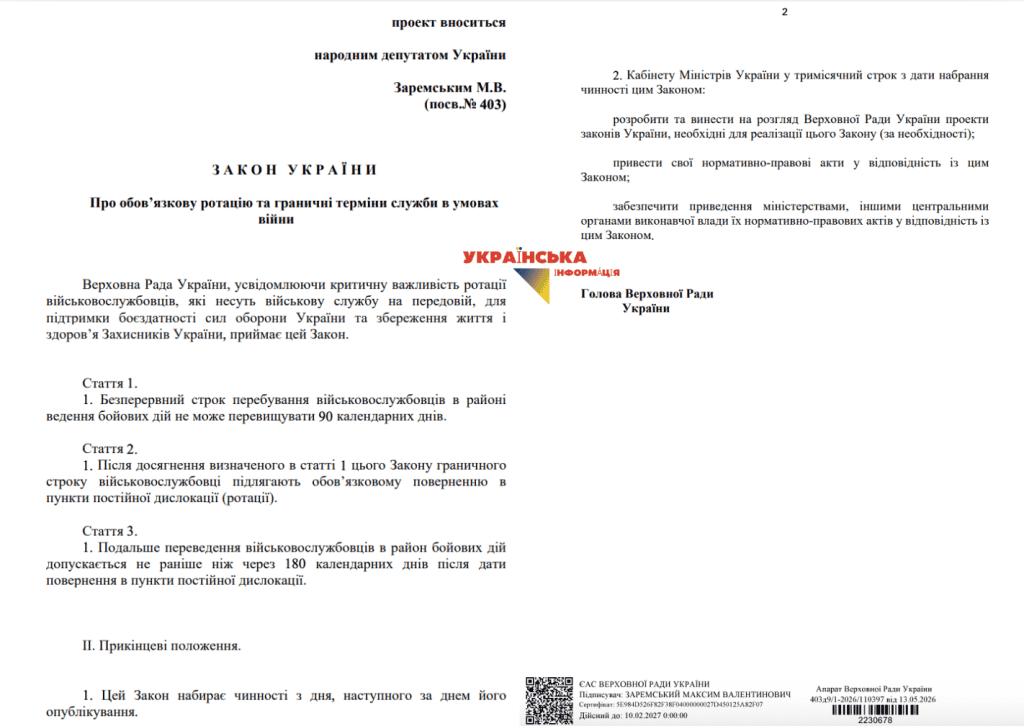
Below we analyze the basics of the document and what legislative consolidation of rotation mechanisms under the new rules is proposed to be introduced to maintain the combat readiness of the troops.
Description of key change proposals
Establishing time limits for staying in a combat zone
The bill proposes a right that clearly limits the time for continuous performance of tasks on the front line, namely:
- The maximum period established by this law provides: A serviceman’s continuous stay directly in the area of combat operations cannot exceed 90 calendar days .
- Mandatory rotation, enshrined in law: After completing the 90-day period of stay on the front line, a serviceman has the right to demand to be returned to the unit’s permanent deployment point (permanent deployment point) for rest and recovery.
Regulation of clear recovery periods (inter-rotation period)
The draft law defines the minimum guaranteed time for each serviceman to spend outside the combat zone before the next mission:
- The guaranteed break enshrined in the law will be 180 days, namely: A serviceman’s re-deployment to the area of combat operations is allowed no earlier than 180 calendar days after his return to the point of permanent deployment.
Justification and expected consequences
The goal set by the bill at the initiative of the deputies is to support the combat capability of the Defense Forces of Ukraine and preserve the lives and health of defenders who perform extremely difficult tasks on the front line of combat.
Social aspect for infantry: Legislative regulation of this issue should ensure a fair approach to service and give military personnel time for rehabilitation.
Financial and organizational aspects
According to the explanatory note, the implementation of these changes will not require additional funds from the State Budget of Ukraine. Financing will be carried out within the funds already allocated for the defense sector.
When are the new changes to service terms proposed to be implemented?
The law has only been sent to the committee for consideration, then there will be proposals and conclusions, after which the deputies will vote for it with amendments, in general, the process is long and may drag on for months. If adopted, the law will enter into force the next day after publication under the signature of the president. After that, the Cabinet of Ministers of Ukraine will have three months to bring all regulatory legal acts into compliance with this law and develop the necessary accompanying draft laws.
These proposals aim to change the current practice, where rotation terms can be determined by internal orders at the discretion of commanders on the ground, leading to cases where soldiers do not change positions for months.
We wrote before
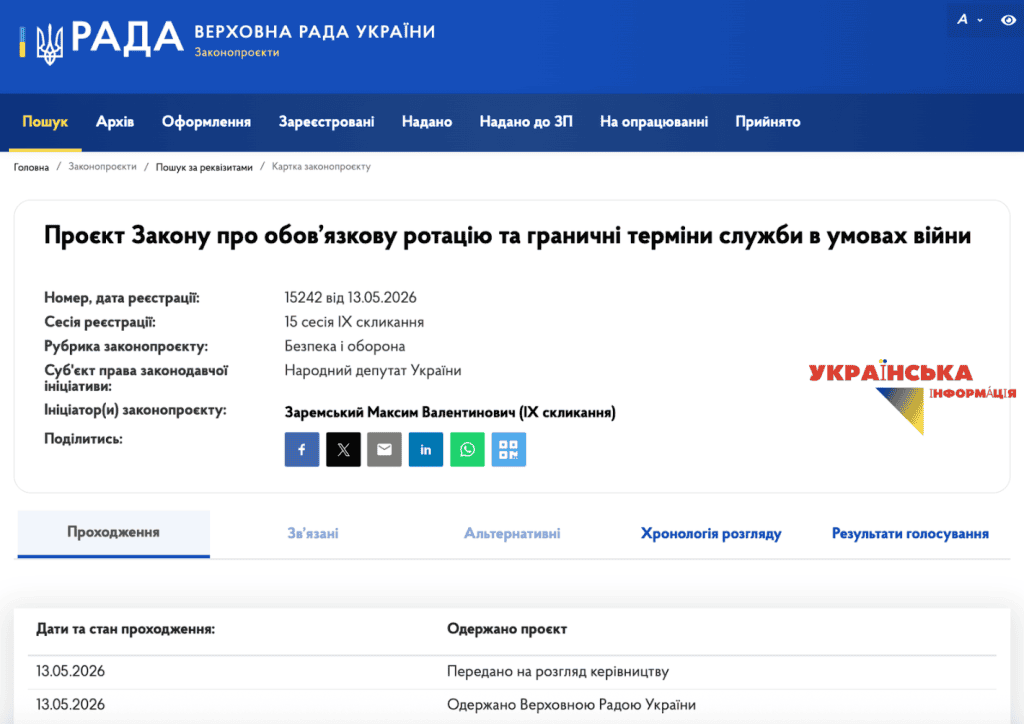
The editorial staff of “Ukrainian Information” continues to monitor systemic changes in the field of service by mobilized personnel from the first days of the war, and on May 13, 2026 , the Verkhovna Rada officially registered the bill No. 15242 , promised as part of a large-scale army reform , which proposes to establish maximum service terms and introduce mandatory rotation for military personnel on the front lines.
A new stage of army reform from Zelensky
The document was initiated by Maksym Zaremsky, a member of parliament from the presidential party Servants of the People . The bill received the promising title “Draft Law on Mandatory Rotation and Maximum Service Periods in Wartime” and has already been received by the parliamentary apparatus and submitted for consideration. The text of the bill should be available for reading within 2-3 days, after it is digitized by the Verkhovna Rada apparatus.
This legislative initiative is a logical continuation of the strategy previously announced by President Volodymyr Zelensky. Recall that within the framework of the ” Army Reform 2026 “, the head of state instructed to develop a mechanism for the transition to clear terms of service. The key idea of the president is to ensure the gradual release of those who were mobilized earlier , based on a larger system of attracting new people through a system of flexible and financially better contracts.
Why is this important right now?
Since 2022 and to this day, mobilized servicemen are in a state of uncertainty regarding their terms of service in general, unlike contract soldiers, who have clearly defined terms of service (a contract for a period of 3 or 5 years, which gives the right to dismissal upon completion). Previous attempts to resolve this issue, in particular, draft law No. 14283 of 2025, have so far been unsuccessful, all explained by the lack of new and existing personnel, and fears of a decrease in mobilization potential and the emergence of an even greater shortage of personnel in military units.
The new reform model, to which Bill No. 15242 refers, according to various sources, including public statements by some deputies involved in the bill, the new law will provide for a solution to this problem by stimulating the influx of new personnel through the contract system . President Zelenskyy focused on a significant financial incentive — from 250 to 400 thousand hryvnias for front-line infantrymen — which should allow replacing those who have been defending the country since the first days of the war.
Main expectations from draft law No. 15242:
- Clear deadlines for those who sign short-term contracts for 1 or 2 years .
- Mandatory rotation: Legislation enshrining the regular replacement of units on the front line to restore combat readiness with clear criteria, checks, and accountability in case of violation.
- Social adaptation in the form of a 1-year deferment after discharge from service: There are public statements about the idea of providing a 1-year deferment to those who have been discharged after their terms of service in order to have a period of social adaptation.
What’s next?
As of today, the document is under development and is not publicly available. According to the President, specific steps and schedules for implementing the reform, including the updated contract system, should be announced by the military command in the near future. It is expected that the new rules, as well as the promised pay increases, may come into effect to some extent as early as 2026 .
Want to receive more news on this topic? Subscribe to our Viber by simply clicking on this text!