
Edited May 14 – 2026
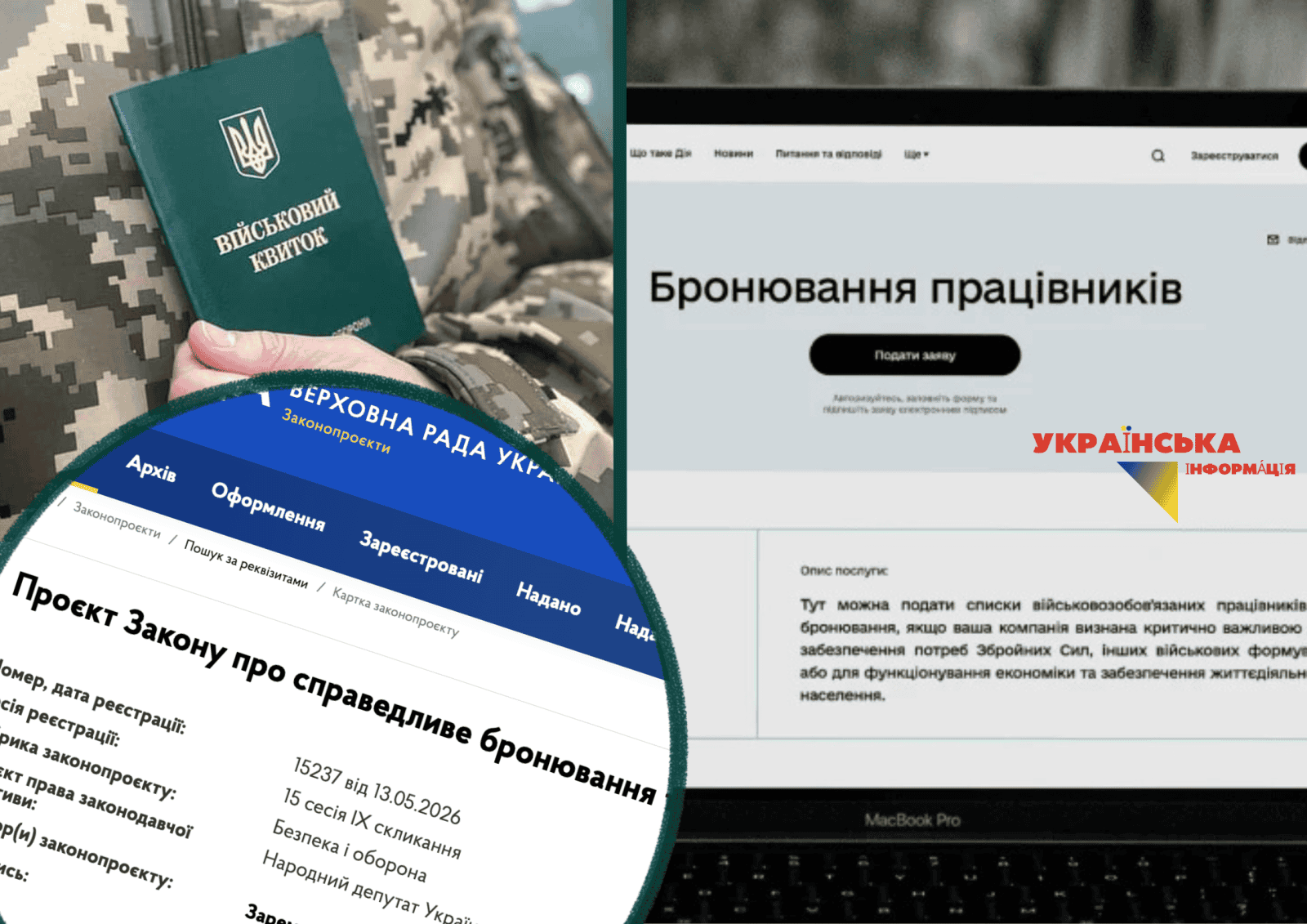
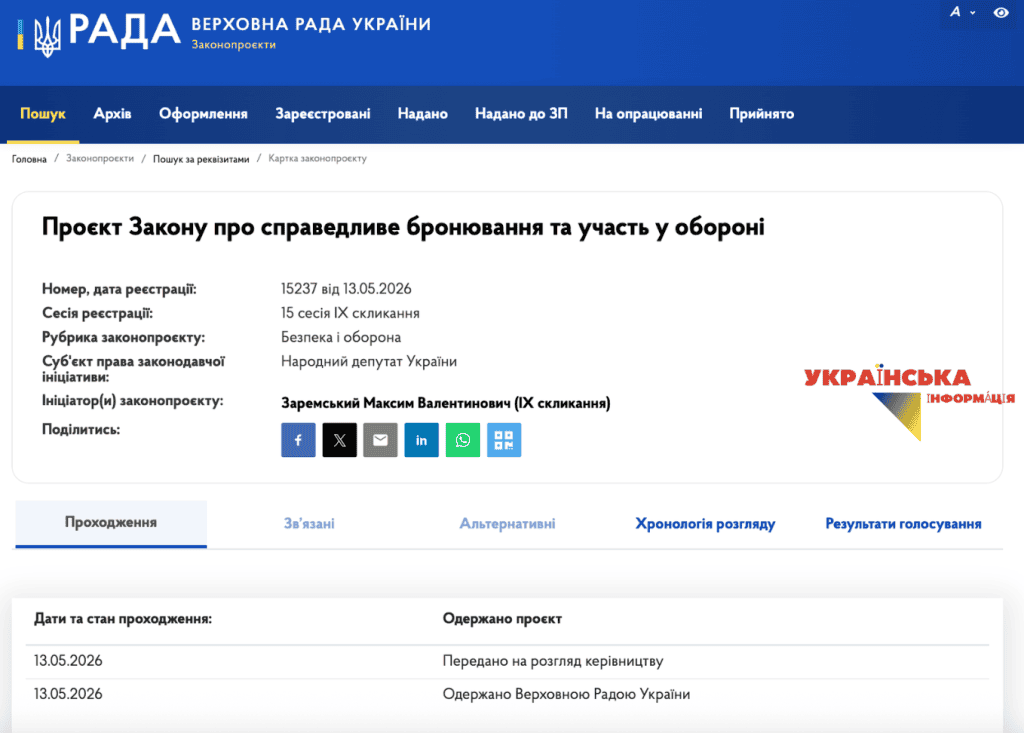
On May 13, 2026, the text of a resonant document appeared on the website of the Verkhovna Rada of Ukraine, namely, proposing new changes to the reservation procedure, making it fairer, this is directly implied by the title “ Draft Law on Fair Reservation and Participation in Defense”, it has already been officially registered under No. 15237 .

The initiator of the legislative initiative was Maksym Zaremsky, a people’s deputy from the Servants of the People party . As of now, the project has already been received by the administrative apparatus of the parliament and submitted for consideration, after which it is expected to be considered by the relevant committees for their conclusions and referral for the first reading to the session hall of people’s deputies.
Main provisions of the draft law
Since this is only a draft law, which may be subject to amendments and changes during consideration and hearings in the Verkhovna Rada, it is already possible to outline the vector of the following changes that the future Law “on Fair Reservation” may provide for, namely:
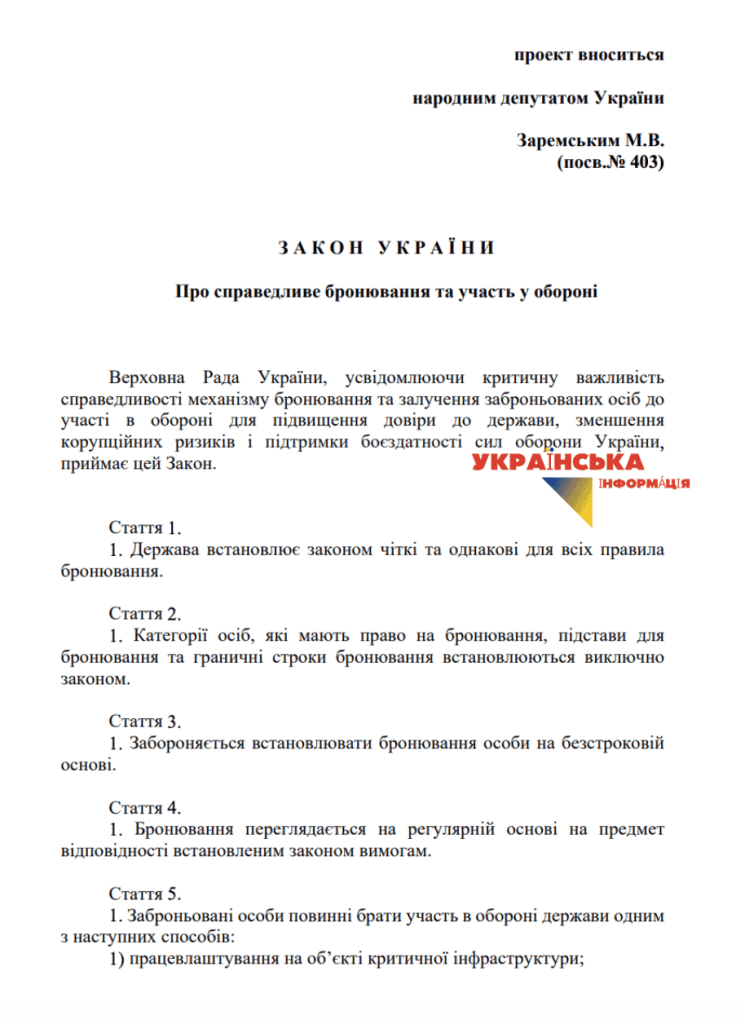
- Uniform rules for all who have a “reservation”: the law establishes clear and absolutely equal, identical and clear reservation rules for everyone, regardless of financial capabilities and status in society.
- Exclusive legislative regulation of all those under “reservation”: the law will regulate the categories of persons, grounds and deadlines for reservation so that everyone knows exactly what to expect and that reservation is not a “legal evasion” from mobilization, but an honest method available to everyone.
- Prohibition of indefinite reservations: the law will establish a direct prohibition on the indefinite validity of reservations.
- Regular review of all who have and provide reservations: The status of booked individuals should be regularly reviewed for abuse, and all who are subject to such reservations should be reviewed, as well as the criteria for compliance with the statutory requirements for reservations.
- Mandatory participation in defense even with reservations: even reserved persons will be obliged to participate in the defense of the state in one of three proposed ways:
- employment at a critical infrastructure facility;
- reserve service;
- making earmarked contributions to defense.
- Creation of a separate Register of “booked persons”: the state will maintain a “Register of Booked Persons,” which includes data on all persons who have a reservation under this procedure.
- Protection of everyone’s data: personal data of individuals booked in the Register, as well as information that may indicate the specific critical infrastructure facility where they work, are subject to depersonalization to avoid leakage of state security information.
In addition, the draft law provides for additional amendments to the relevant Law of Ukraine “On Mobilization Training and Mobilization” . The main goal of the changes is to reduce the corruption risks of “fictitious reservations” and maintain the combat capability of the army.
It is noted that the implementation of the law will not require additional expenditures from the state budget, as it will be carried out within the funds allocated for defense.
Previously we wrote
Continuation of the reform: what is known now
As we wrote earlier , the issue of reforming the mobilization and military accounting system has become key and should have been submitted for consideration or adopted in the period April-May 2026. We have already analyzed the related bill No. 15236 , which envisages the introduction of changes to mobilization in general, namely by reforming the CCC and creating a new “system model of mobilization”, which was also published on 05/13/2026.
The new consecutive bill is the next number 15237 and is a logical continuation of the changes within the framework of the new army reform and mobilization procedure, focusing specifically on the issue of fairness of the employee reservation mechanism .
What changes await business and military personnel?
Although the full text of the document is not yet available for review, this will happen in the near future, once the text is converted by the VR device into a digital copy, within 2-3 days (the full text may be available on Friday or as early as Monday). After that, the full text will be provided to the relevant committees. Given previous announcements and our sources in the relevant committee, we can highlight several key expected innovations that will await reserved employees and their companies:
- Changing the criteria for criticality of enterprises: We previously drew attention to the fact that not all enterprises that have reservations directly affect the country’s defense potential. Also, the media, citing close lawmakers, wrote that private enterprises will have to meet more complex criteria to obtain the right to reserve their employees. Already in the draft law No. 15237 it will be known what new criteria and changes will await employees and critical enterprises.
- Digitalization of processes: It is expected that the list of enterprises that have confirmation of reservation will be made public; this will possibly be implemented through digitalization with the “Reserve+” and “Action” services , as we noted in our previous analytical materials.
- Eliminating accidental “busification” of reserved persons: There is another problem with the fear of accidental mobilization among those with reservations, even with “reservations”, due to problems in the mobilization procedure itself without accurate verification.
Who might be affected first?
Based on the types of data currently known and our projections, the new “fair booking” rules will most impact:
- Heads of enterprises that currently have the status of critical, but do not have a direct impact on the defense sector and do not have a significant impact on the economy. For example, cultural institutions, circuses, exhibition venues and media platforms.
- Employees whose reservations will have to be made according to the new shifts.
The editorial staff of “Ukrainian Information” continues to monitor the passage of the bill in committees. We recommend that our readers check the relevance of their data on specialized websites now.
Follow the updates on our website – we will promptly inform you when the text of draft law No. 15237 becomes publicly available for detailed analysis.
Want to receive more news on this topic? Subscribe to our Viber by simply clicking on this text!