
Material updated on May 14, 2026
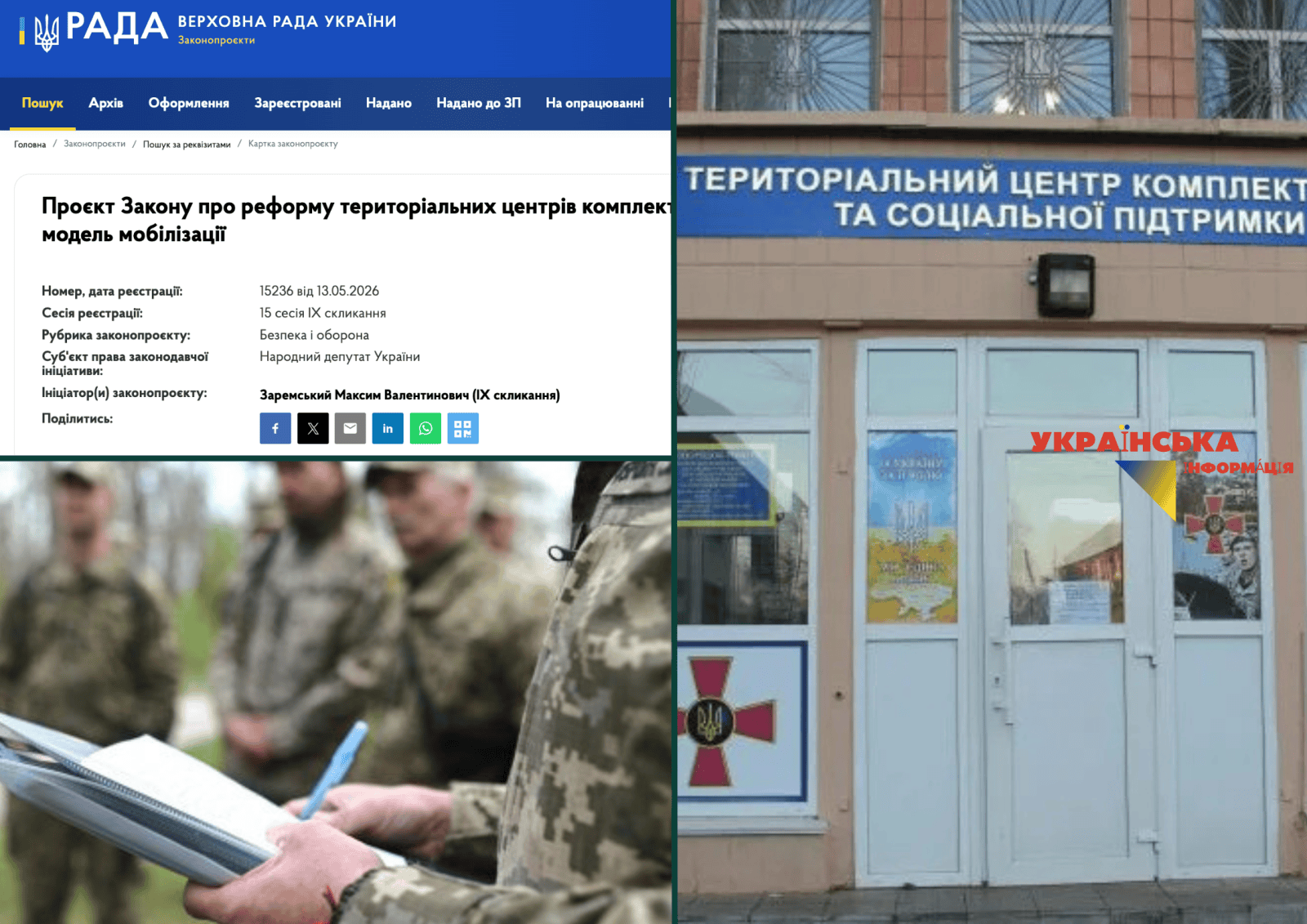
On May 13, 2026 , draft law No. 15236 dated 05/13/2026 was submitted to the Verkhovna Rada of Ukraine and officially registered , namely in response to the resonant social problem of the lawlessness of the CCC and the SP, as well as the need to improve the mobilization system in Ukraine.
The new legislative initiative aims to fundamentally change the system of military conscription by Territorial Recruitment Centers and generally introduce the “Service Model of Mobilization,” as the name of the bill implies.
Details about bill No. 15236
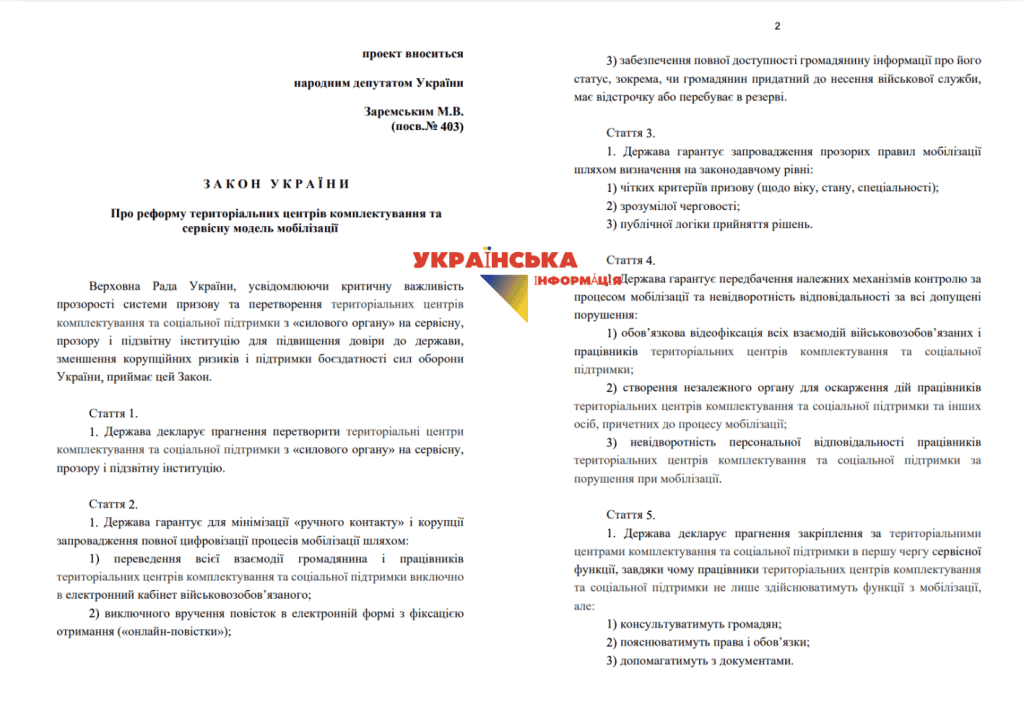
Currently, the main text of the bill has already been published. Therefore, the text of bill No. 15236 of 05/13/2026 is available for reading below .


Key proposals for changes
Reforming the CCC from a “law enforcement agency” to a transparent service center
For a long time, discussions have been underway in Ukraine about the necessary initiated new large-scale reform of the defense forces recruitment system, it is from these voices of the people that the proposed text of the changes has been published, which is proposed to be enshrined in a new separate Law of Ukraine “On the Reform of Territorial Recruitment Centers and the Service Model of Mobilization”. The main goal of the document is to fundamentally change the very philosophy of work and the meaning of the TCC and the SP for citizens, namely by transforming them from closed “law enforcement bodies” into transparent, service and accountable institutions (for example, as was the case with the MREO and the ASNAP at one time).
Full digitalization and “online summonses”
One of the options for changing the system from the inside is the first of the most important innovations, namely the transition to full digitalization of all mobilization processes to minimize or completely eliminate “manual human intervention” in contacts between a citizen and the military commissar of the CCC and the SP.
The draft law in its text provides for these changes as follows:
- Everything will be reduced to the exclusive use of the conscript’s electronic account for any interaction with the CCC.
- From now on, the delivery of summonses will be exclusively in electronic form with mandatory recording of the fact of receipt (i.e., the actual introduction and implementation of “online summonses” with the abandonment of paper summonses from the “knee” on site).
- Providing citizens with quick and unlimited access to information about their status in the registers: fitness for service, deferment, or reserve status.
Transparent rules and public decision logic
In order for every citizen to understand, as the author of the bill indicates, “why he” is subject to conscription, the state guarantees the introduction of transparent mobilization rules at the legislative level.
This includes establishing clear recruitment criteria :
- by age,
- health status,
- specialty,
- and also according to a specific, clear sequence of your mobilization.
The entire logic of “why me”, “why me” – from the decision-making of military commissars regarding your conscription into military service – should become public, which will deprive the system of elements of unpredictability.
Strict control and video recording
To prevent abuse and conflicts, the bill proposes new strict control mechanisms. Among them:
Mandatory video recording is becoming an integral part of any interaction between CCC employees and conscripts.
In addition, it is planned to create an independent body to appeal the actions of recruitment center employees. An important aspect is to establish personal liability of TCC employees for any violations committed during the mobilization process.
Changing the philosophy of mobilization: Service like other public services instead of “hunting”
The new model assumes that CCC employees should primarily perform a service function of providing clear and concise services according to the rules of their mobilization duties. This means moving from “catching” people on the streets to actively working with them: counseling, explaining rights and responsibilities, and assisting in preparing the necessary documents.
Separately, to avoid excessive abuse of power and corruption risks, the functions of the CCC will be divided: some units will deal exclusively with accounting and administration, and others will make mobilization decisions.
Expected consequences
The authors note that the implementation of this reform will not require additional budget expenditures, as financing will be provided within the funds allocated for defense. Separately, it is expected that such changes will make mobilization processes legitimate in the eyes of society on the basis of justice and law.
We wrote before
From what is known at the moment – the Draft Law received registration number 15236. The full name of the document is “Draft Law on the Reform of Territorial Procurement Centers and the Service Model of Mobilization” . This initiative is being considered within the 15th session of the Verkhovna Rada of the 9th convocation and is classified as a draft law in the field of “Security and Defense” .
The subject of the legislative initiative was People’s Deputy of Ukraine Zaremsky Maksym Valentinovich, a member of the Servant of the People parliamentary faction .
Key vectors of change: the work of the CCC and the mobilization system

According to the title of the bill, it is clear that the main emphasis is placed on two aspects:
- Reform of territorial recruitment centers (TCC): transformation of existing structures is envisaged. According to preliminary data, the possibility of transferring some functions of the TCC and SP to the units of the National Police of Ukraine is being considered.
- Introduction of the “service mobilization model”: the new name “service mobilization” is used for the first time, which means a new principle of interaction between the state and conscripts, where the priority is a “service”, that is, the most humane (human), or as they say in business, a “customer-oriented” approach.
Current status of consideration

As of the date of registration, May 13, 2026, the draft law has passed the first basic stages of:
- Registration, namely the project was received by the Verkhovna Rada of Ukraine: 05/13/2026.
- Submitted for review to management in relevant departments and committees: 05/13/2026.
- After which it is expected to be submitted to the deputies for consideration.
- And inclusion in the agenda of the plenary session of the Verkhovna Rada.
Currently, the document is in its initial stage, even its text, which will be available within 2-3 days, is not the final version, as there is a long legislative process ahead with amendments and additions from deputies in the Rada .
After it is forwarded to the relevant committees, we will also have the text of the conclusions for further discussion in the session hall by the deputies.
Read also: Who gets automatic extension of deferral: full list of categories
In conclusion: This brief interim summary that can be made at this stage, provides for a new step in reforming the CCC and the Joint Forces, as well as the introduction of a humane mobilization procedure with a service approach in the procedure, which is part of a broader strategy for updating the security and defense system of Ukraine, aimed at modernizing the processes of manning the Armed Forces.
Want to receive more news on this topic? Subscribe to our Viber by simply clicking on this text!