
The National Police of the Kyiv Region is warning of a surge in a new form of telephone fraud, where scammers impersonate bank employees and lure money into the so-called “Reserve Account.”
Law enforcement officers warn: do not answer calls from unknown numbers, and especially do not respond to calls allegedly from the “bank security service,” which, under the guise of saving your savings, lure you out of your last money.
Read also: Top 5 fraudulent schemes in Telegram: how not to lose money
The gist of the scheme: how the “safe account” trap works
Just imagine the situation: a subscriber calls you at the phone number that you indicated as a contact number at the bank, introduces himself as a bank security officer, addresses you by your full name and informs you that right now, a fraudster is trying to steal all your money and savings that you have on your credit cards and accounts at their bank.
Your actions?
From a psychological point of view, your trust mechanism is activated: “Oh, this wonderful employee of my bank, who knows everything about me, is trying to help me by saving my money and savings from scammers – I can trust him!”.
Next, the caller asks you to immediately take measures to protect your funds, namely by transferring them to a “new reserve bank account” that he allegedly created specifically for you.
You already trust the interlocutor as a bank employee who knows your details, and unsuspectingly do everything he asks to protect your money. You log into your banking app and transfer the funds to a new “secure account” that a “caring bank employee” has just created for you by sending you its number in an SMS message.
This is where the scam ends. The employee says that everything went well, you don’t have to worry about anything, your money is in safe hands in a “reserve bank account” protected from scammers.
Deception mechanics
As you probably already understood above, the mechanics of the scam are based on psychological pressure and imitation of the official activities of the bank. The attackers act according to a clear algorithm:
- Alarm call: The victim is called allegedly by the bank’s security service and told their correct full name (to gain trust, it is assumed that this is a real employee who knows everything about me), in practice, the phone number and full name of the person to whom it belongs can be bought in merged darknet databases. Next, a trigger that switches the focus of attention to “suspicious transactions” or an attempt to “unauthorized withdrawal (theft) of funds from the card.”
- Offer of “protection”: Right away, so that you don’t have time to think about what you can do to stop the “theft”, scammers offer their quick and easy solution – immediately transfer all the money to a so-called “reserve” or “safe” account that is supposedly personal to you only, created by a bank employee with whom you have already established contact and are talking.
- Illusion of security: Scammers claim that this is a temporary measure, and after creating a new card (account), the funds will be returned to it automatically.
- Finale: As soon as the transaction is completed, the communication with the “bank employee” switches to a reassuring tone without panic and fever, “everything went well, your funds are safe,” and the conversation is interrupted, and access to money and savings, as the victim often does not immediately suspect, is lost forever.
Psychological tricks: how else scammers exploit trust to steal your money
In order to lull citizens into complacency, criminals use additional methods of manipulation. They can present themselves not only as bank security guards, but also assure that they are already cooperating with the police to apprehend the “thieves.” Such a combination of “bank + police” creates a feeling of help and instant karma for the criminals.
The main signs of fraud: remember these rules
The Kyiv Region Police and the Department of Communications of the Ministry of Internal Affairs emphasize critically important points that will help recognize a scam:
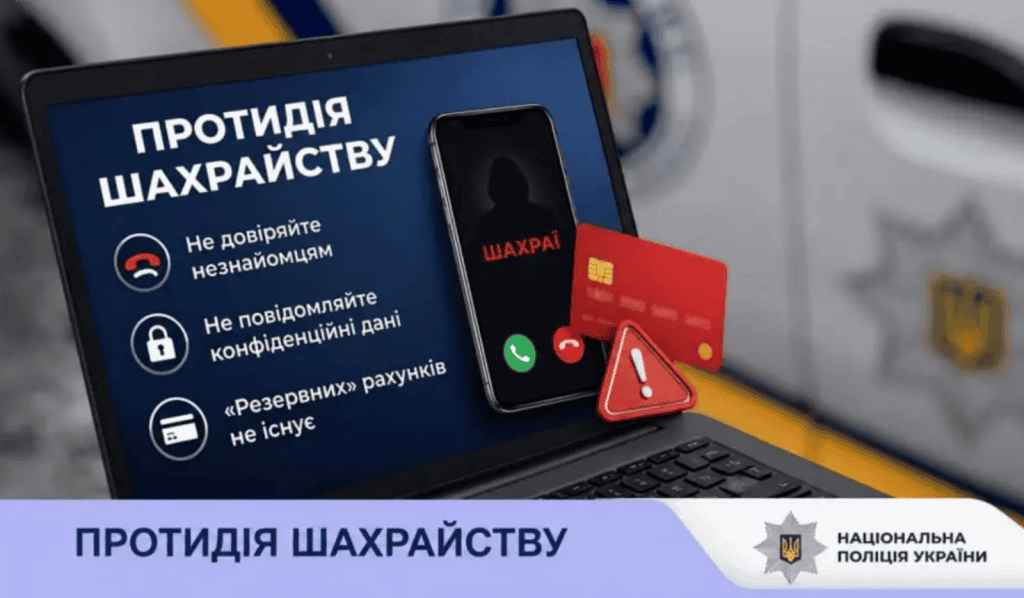
- Real banks and their employees never ask to transfer money to any “reserve”, “protected” or “transit” accounts.
- Confidential information like how much money you have in your account, how much you have in savings, or how many accounts you have in total is taboo. Financial institution employees never ask for your CVV code (the three digits on the back), SMS passwords, or PIN codes.
- Remote “problem resolution.” If the bank really sees a threat, it will simply block the card and ask you to come to the branch, rather than requiring urgent action or funds transfers via SMS or phone.
What to do if you receive such a call?
If you hear a story about a “bank employee,” “reserve account,” or “transfer of funds,” immediately follow these instructions:
- Immediately end the conversation. Do not try to enter into a polemic or discussion with scammers, trying to find out “are they scammers?” They, as professional manipulators and psychologists, can insidiously convince you.
- Check the information yourself. Call your bank’s official hotline or write to online support on the financial institution’s official website and check the account information.
- Report the incident. If you notice suspicious transactions or if you have already become a victim of fraud, call the police immediately at 102 or 112 .
Be vigilant! Fraudsters are constantly improving their methods and may slightly change their approaches and versions of what happened, but your main weapon is to verify information through official channels.
Want to receive more news on this topic? Subscribe to our Telegram or Viber by clicking on the text!