

With the first real warmth, not only the long-awaited spring has come to Ukraine, but also a serious danger. The Centers for Disease Control and Prevention (CDC) are already sounding the alarm and officially warning: the tick activity season has begun extremely aggressively. Resting in nature, walking in the park and even in the city, or even working in the country now require maximum caution. We are figuring out how serious the
With the first real warmth, not only the long-awaited spring has come to Ukraine, but also a serious danger. The Centers for Disease Control and Prevention (CDC) are already sounding the alarm and officially warning: the tick activity season has begun extremely aggressively .
Resting in nature, walking in the park and even in the city, or even working in the country now require maximum caution. We understand how serious the situation is and how to act correctly to protect yourself and your loved ones.
Read also: Seasonal allergies 2026: pollen calendar by day + tips
Anomalous activity: what happened in Rivne?
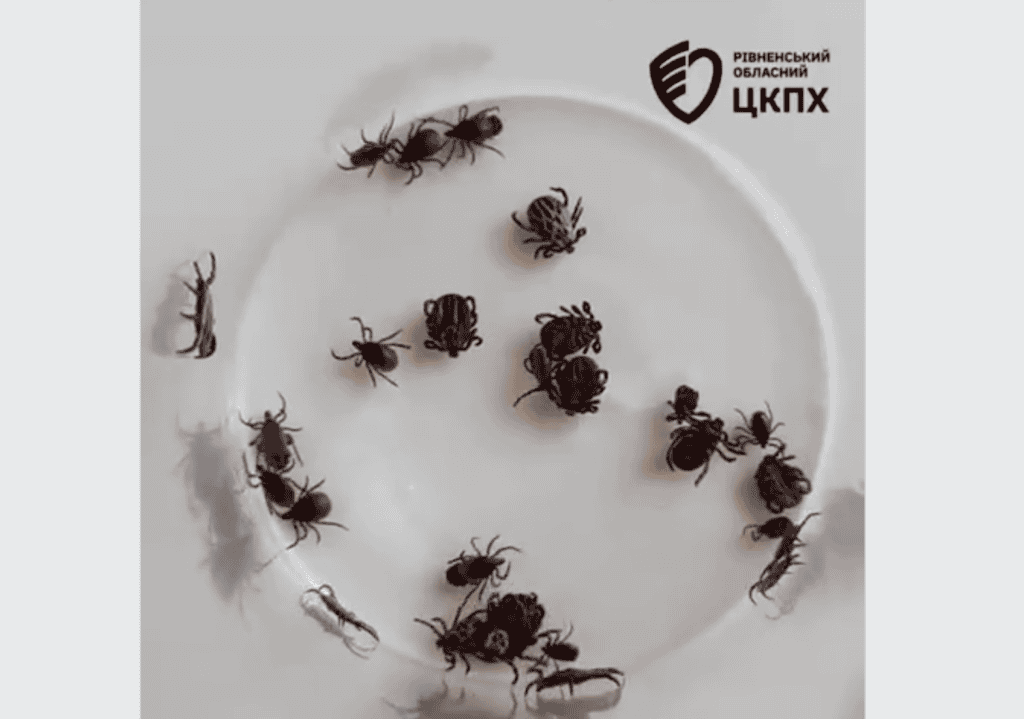
A recent monitoring in Rivne was an indicative and alarming signal. Specialists of the local Central Pest Control Service conducted a standard inspection of one of the city parks. The results are impressive: in just 20 minutes , 24 dangerous parasites were detected on a one-kilometer route .
This means that the concentration of ticks in green areas is currently critically high. This situation is typical not only for the Rivne region, but also for most regions of Ukraine where warm weather has set in.
How to protect yourself from ticks and properly examine yourself after a walk
The Ministry of Health of Ukraine (MOH) emphasizes that prevention is the best protection. After each return from the street, especially from parks or forests, it is necessary to follow a clear algorithm of actions:
- Proper inspection: Carefully inspect yourself and your loved ones under good lighting. Start the inspection from the bottom, from the feet, and gradually move up (because the bottom is the place with the greatest possible insect infestation).
- Areas of special attention: Ticks seek out the thinnest skin. Be sure to check the sock line, the hollows of the knees, the lower and upper underwear lines (groin), the stomach, the collar of the shirt, as well as the hair, ears and scalp. It is advisable to shake the items immediately on the surface or wash and dry at high temperature.
- Water procedures: If you have been in particularly dangerous places where ticks accumulate, near a green lawn, bushes, in the forest, fishing, or just in a local forest, take a shower immediately – this will help wash away ticks that have not yet had time to attach to the skin.
- Treatment of things: Clothes and picnic blankets should be thoroughly cleaned or beaten out and washed as we wrote above. Please note: a simple shake-out after a picnic will not help get rid of the parasite, they are small like most insects, so they easily burrow deep into the cotton and hold on to the fabric quite well due to the special structure of their legs.
What to do if you are bitten by a tick?
If you find a tick on your body, the main rule is not to panic, not to make sudden movements, not to try to just pull it out with your hand, but you don’t need to pull it out either. Note: There are many dangerous myths surrounding this topic.
It is strictly forbidden to pour alcohol, oil, or any other substance on a tick. This will not make it come out, but on the contrary, it can provoke the release of dangerous bacteria into your bloodstream.
The correct algorithm of actions from the Ministry of Health:
- Removing a tick yourself: Pull the tick out as soon as possible. You can do this with special tweezers sold at pharmacies or pet stores, or by going to the nearest emergency room.
- Disinfection of the affected area (tick wounds): After removal, the bite site should be treated with an antiseptic, and hands should be washed thoroughly with soap.
- Laboratory testing is not mandatory: The official recommendation of the Ministry of Health states that it is not necessary to submit the tick itself for analysis unless you suspect complications or other concomitant health problems that may complicate healing or cause blood loss.
When do you need to see a doctor urgently?
After a bite, you need to carefully monitor your well-being for several weeks.
You need immediate medical attention if:
- Body temperature has increased.
- Redness (erythema migrans) appeared on the skin (especially around the bite site).
- Important: If the tick has been on your body for more than 36 hours , be sure to see a doctor – you may be prescribed antibiotics for emergency post-exposure prophylaxis of dangerous Lyme disease.
Don’t neglect these rules. Simple vigilance while walking can protect your health.