

On May 30, 2026, the text of the Resolution of the Cabinet of Ministers of Ukraine on “Some issues of booking military personnel for the period of mobilization and for wartime” dated May 30, 2026 was published. The text states that the Cabinet of Ministers of Ukraine resolves:
1. To make the following changes to the Resolution of the Cabinet of Ministers of Ukraine dated January 27, 2023 No. 76 “Some issues of implementing the provisions of the Law of Ukraine “On Mobilization Training and Mobilization” regarding the reservation of military personnel for the period of mobilization and for wartime” :

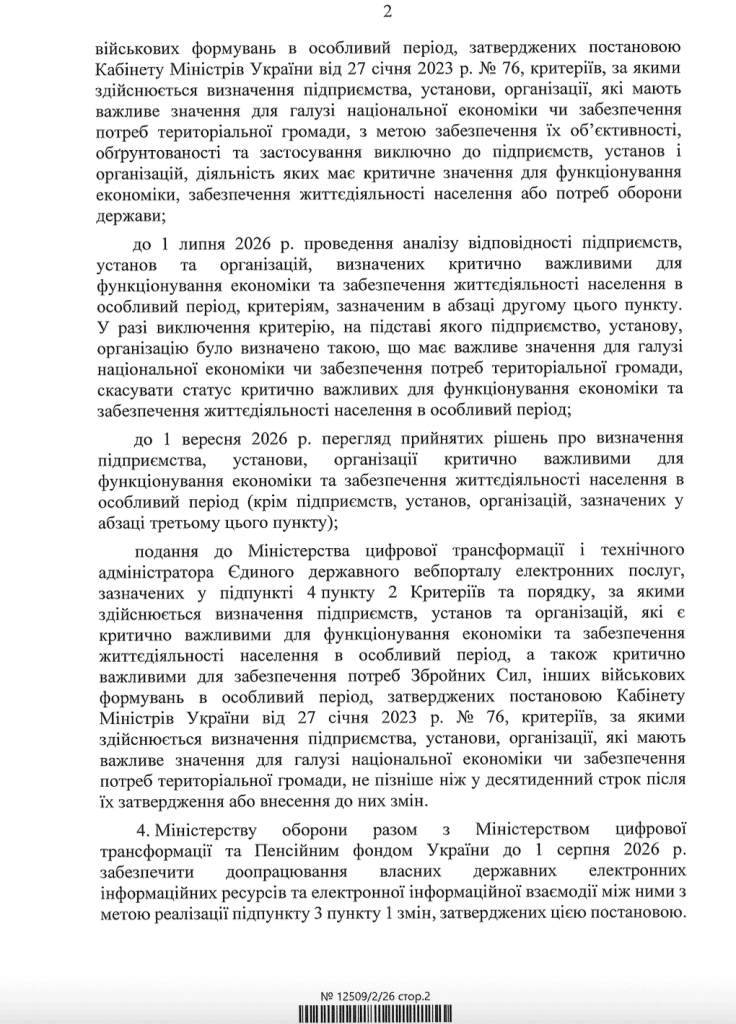
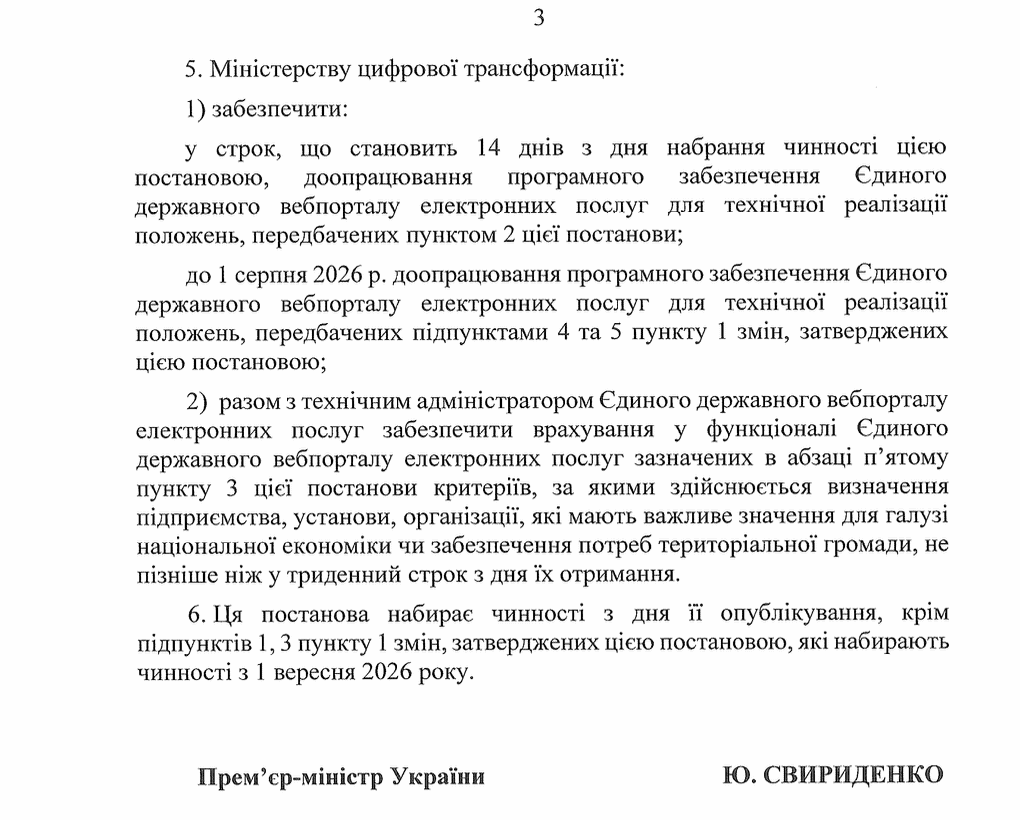
In this article below, we will analyze 8 key changes that await Ukrainian enterprises with the status of “critically important”, or those that are just planning to receive “criticality” under the new procedure. We will also analyze the deadlines and new changes that are being prepared for implementation, such as:
- raising the minimum wage at the enterprise,
- cancellation of “extra” booking,
- risk of losing criticality status,
- exceeding booking limits,
- and we will also explain why Diya City is more than just residency.
Analysis and detailed analysis of changes under the new CMU resolution on reservations
Business has long been waiting for the preparation of a new resolution of the Cabinet of Ministers of Ukraine, which, as stated, radically changes the rules of the game in the field of booking military conscripts, in order to avoid abuses of obtaining “criticality” status and fictitious bookings at enterprises.
The text of the draft resolution was initially made public by People’s Deputy Yaroslav Zheleznyak , and it immediately left behind many questions regarding the new key changes in booking, which we discuss below.
1. Increasing the “salary scale” to 3.0
One of the most important changes is the increase in the salary requirements for employees who are planned to be reserved. Previously, a coefficient of 2.5 of the minimum wage was used for this, now it is being raised to 3.0 of the minimum wage. The same rule applies to the average salary at the enterprise to obtain the status of “critically important”.
- Exceptions: State, municipal institutions and enterprises operating in a combat zone (for them, the coefficient of 2.5 of the minimum wage remains).
2. Preferential treatment for frontline businesses
The government decided not to extend the new changes to the minimum wage to support businesses operating in extremely difficult conditions in areas close to hostilities. Thus, separately for businesses located in areas of possible or active hostilities, as well as in temporarily occupied territories, the old coefficient remains at 2.5 of the minimum wage.
3. Mandatory cancellation of “extra” bookings
This is a new rule that was not previously provided for in the order for the booking procedure for employees of critical enterprises. Thus, the new regulation turns a general recommendation, which was not followed in particular, into a clear obligation that may result in punishment. If the enterprise has exceeded the limit of booked persons, the manager is obliged to submit an application for the cancellation of “excess” reservations via the Diya portal within 10 working days .
Previously, the wording was less prescriptive, which led to an overestimation of the number of reserved employees above the established “quota” of the enterprise.
4. Risk of losing critical status
Now, exceeding the limits of reserved employees is not just a bureaucratic error, but, as we wrote above, a real norm, violation of which is subject to severe punishment in the form of the risk of losing the critical status of the enterprise, which will entail the analysis of all, even previously legally executed, “reservations” of employees of this enterprise.
According to the text of the draft Resolution of May 30, 2026, such a violation is grounds for the complete cancellation of the critical enterprise status of the violator, as a result of which the company automatically loses the right to any booking in the future.
5. Accounting for part-time workers: “One employee — one place”
The government is closing the loophole with double counting by employing one employee who is not subject to conscription at several critical enterprises to increase the quota at several enterprises with “reservation” at once.
Employees who have a deferment under other articles of the law or work part-time are now counted in the total number of military conscripts only at one (main) place of work .
6. City Action: More than just residency
For residents of “Diya City”, the rules are becoming stricter. Now it is not enough to simply have the status of a resident of Diya City and thereby close one of the 3 points necessary to be recognized as critical by the local authorities.
From now on, according to the new changes, residents of “Diya City” must additionally meet the requirements of Article 5 of the Law on the Digital Economy . That is, there is an additional requirement that such a resident of “Diya City” must be confirmed by tax reporting for the last 6 months .
7. Global verification of sectoral and regional criteria
Local authorities have been given a separate mandate to review the criticality criteria for each enterprise on their list by territorial criteria. The goal is to leave only those companies that are truly strategically important on the lists and minimize the practice of “artificial” reservations , including for money and to avoid mobilization.
The Unified Database of the List of Critically Important Enterprises of the Region will now clearly indicate the criteria by which the enterprise received its status.
Calendar of changes by date
Since the adoption of this resolution by the Cabinet of Ministers of Ukraine, businesses should pay attention to the following deadlines set out in the draft:
- By June 10, 2026: Complete review of industry and regional criticality criteria.
- By July 1, 2026: Analysis of all enterprises for compliance with the updated rules.
- Until September 1, 2026: Revision of all previously made criticality decisions. Old decisions are only valid until this date!
- September 1, 2026: Official launch of the increased salary coefficient 3.0.
Most other provisions of the resolution will come into force immediately after its official publication.
Want to receive more news on this topic? Subscribe to our Viber by simply clicking on this text!