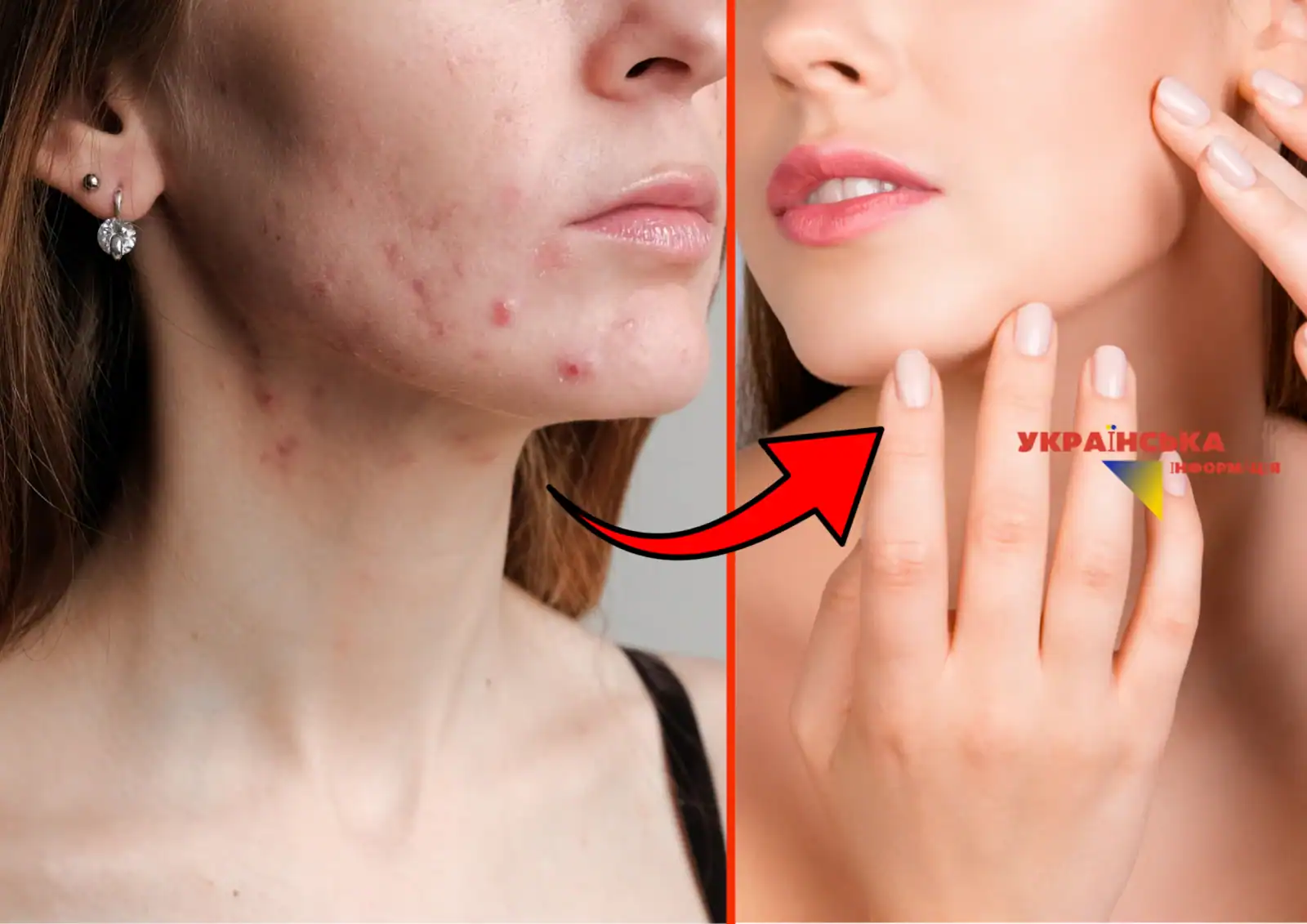
Many of us are used to thinking that if acne on the face is just a “teenage problem,” or if it happened in adulthood, it is a “temporary rash.”
For millions of people, this problem is becoming more widespread, and it’s no longer just acne on the face, but daily stress that affects self-esteem, mood, and even social life.
In this article, we’ll look at why acne occurs, what the most common causes are, how to distinguish between normal acne and serious problems, and what really works for treatment and prevention. Everything is simple, to the point, and scientifically based, read on in our article.
Important disclaimer: The article is for informational purposes only and is not a call to action for self-treatment (home treatment). Always consult a dermatologist. Special attention for those whose acne is severe, painful, leaves scars or is accompanied by other symptoms (temperature, pus, skin irritation (flaking, itching) – immediately contact a dermatologist or cosmetologist!
Read also: What do our dreams mean: snake, pregnancy, teeth, ex, children crying
Why do acne on the face bother millions of people?
Pimples (or in scientific terminology – acne) are one of the most common skin diseases in the world. According to dermatologists, up to 85% of teenagers and about 40–50% of adults suffer from acne. In Ukraine, this problem is also very common, especially among young people aged 18–35. And the problem here is not only at a young age.
Acne affects more than just appearance. It often causes anxiety, low self-esteem, social isolation, and even depression, especially in young people whose psyches are just forming, and they themselves are starting their journey in adult life (first job, career, love, etc.). Many people try to get rid of rashes for years, spend huge amounts of money on cosmetics and procedures, but there is no result .
Why is this happening?
Because most people deal with the symptoms, not the causes. The other half simply ignore the problem instead of starting to solve it right away. And when acne leaves scars, panic sets in.
Understanding the real causes of acne is the first and most important step to clear skin. In this article, we have taken a scientific approach and referenced scientific sources to break down everything from the scientific mechanism of acne formation to practical recommendations that actually work.
How pimples form: a scientific explanation in plain language
Acne occurs due to a combination of four main factors:
- Overactive sebaceous glands – too much sebum is produced. That is, as the popular saying goes, “I have oily skin, so it’s harder for me to fight acne.”
- Hyperkeratosis is excessive keratinization of cells in the ducts of the sebaceous glands, which causes the pores to become clogged. Then the “pimple” grows due to the multiplication of bacteria inside.
- Bacterial overgrowth – mainly the so-called acne bacteria, i.e. Cutibacterium acnes (formerly Propionibacterium acnes).
- Inflammation is the immune system’s reaction to clogged pores and bacteria, which has an unpleasant appearance on a person’s face in the form of variously colored pimples (yellow pimple).
When these four processes combine, a comedone (a blocked pore) is formed, which can then become inflamed and develop into a papule, pustule, or nodule.
15 main causes of acne on the face

Scientists and doctors have identified the most common causes of acne on the face, confirmed by scientific studies, most of which do not depend on age (although the age factor also plays a role):
- Hormonal imbalance is the most common cause (androgens stimulate the sebaceous glands).
- Genetics – if the parents had acne, the child’s chances are much higher.
- Stress increases cortisol levels, which stimulates sebum production.
- Improper nutrition – milk, sweets with a high glycemic index, fast carbohydrates.
- Excessive use of cosmetics (comedogenic cosmetics).
- Disruption of the skin microbiome .
- Chronic inflammation in the body .
- Gastrointestinal tract problems .
- Insufficient skin cleansing or, conversely, excessive cleansing .
- Vitamin and mineral deficiency (zinc, vitamin D, omega-3).
- Sleep disturbances and chronic fatigue .
- Contact with irritants (masks, scarves, telephones).
- Medications (steroids, some antibiotics, contraceptives).
- Air pollution and ecology .
- Seasonal factors (summer heat, winter dryness).
Acne in teenagers and acne in adults: key differences
Teenage acne is most often associated with hormonal changes in the body. It mostly appears in the T-zone (forehead, nose, chin).
Acne in adults (after 25 years of age) is more likely to occur due to:
- Hormonal disorders (polycystic ovary syndrome, thyroid problems)
- Stress and chronic fatigue
- Improper care and cosmetics
- Bowel problems
- Dirty things
- Polluted environment
- Incorrect feeding
- Lots of sugar
In adults, acne is more likely to appear on the lower part of the face (chin, cheeks, jawline). But the location is not always decisive. Sometimes acne is also present on the back and arms or legs at the same time.
Myths about acne that Ukrainians still believe in
- “Pimples only appear because of dirty skin, if you wash regularly you won’t get acne”
- “If you squeeze pimples, they will disappear faster, or squeezing pimples is beneficial”
- “Chocolate and fatty foods always provoke acne”
- “The sun helps with acne”
- “If you don’t use cosmetics, acne will go away”
How to tell when acne is not just a “rash” but a signal of serious problems
See a doctor urgently if:
- The pimples are very painful, large, contain pus and leave scars.
- Nodules and cysts appear
- Acne is accompanied by menstrual irregularities, excess weight, and hair loss.
- Treatment for 3 months does not give results
What really works: scientifically proven methods to combat acne
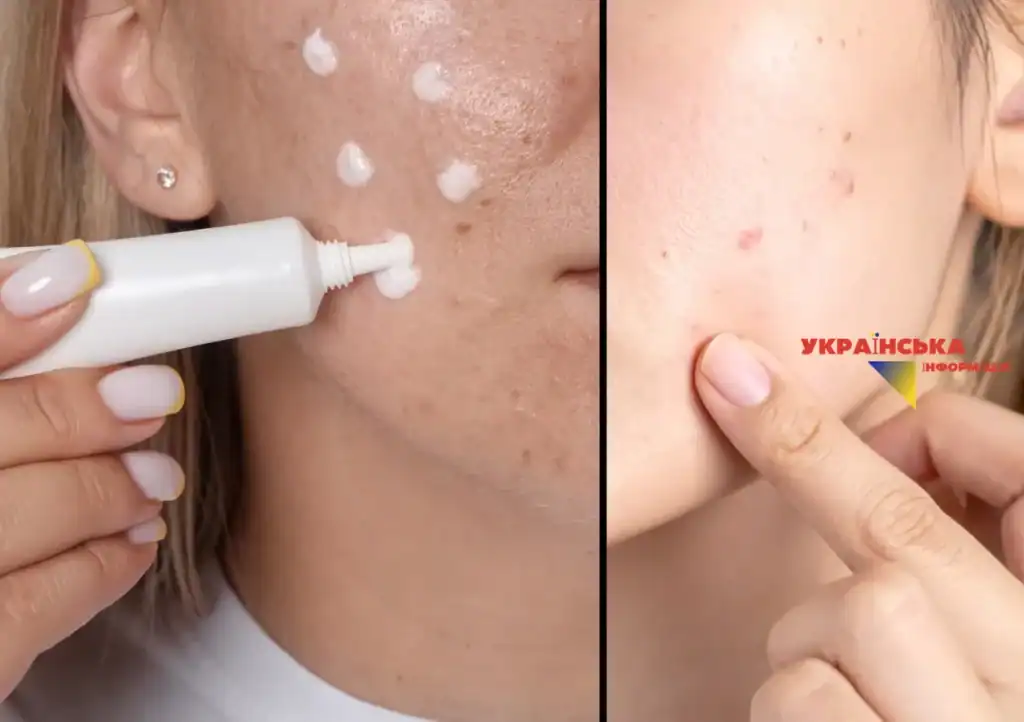
1. Topical treatment (retinoids, benzoyl peroxide, azelaic acid). Note: only after consulting a doctor. Do not self-medicate, it can harm your health!
2. Systemic treatment (in severe cases – antibiotics, isotretinoin). Only with a doctor’s prescription. Note: Self-medication can harm your health!
3. Proper daily care (cleansing + moisturizing)
4. Correction of diet and lifestyle . Less flour, sweets, dairy products, because they are the ones that cause acne. More vegetables and fruits in the diet, you can also eat porridge and soups.
5. Cosmetic procedures (peeling, laser, phototherapy). If recommended by your doctor.
Link to scientific source:
American Academy of Dermatology (AAD) Guidelines for Acne (2016, updated) – official recommendations of American dermatologists Link: https://www.aad.org/member/clinical-quality/guidelines/acne
Cochrane Systematic Review (2020) – the best evidence-based review of topical acne treatments
Link: https://www.cochranelibrary.com/cdsr/doi/10.1002/14651858.CD003281.pub2/full
Zaenglein AL et al. (2016) – review of acne treatment in the Journal of the American Academy of Dermatology
Link: https://pubmed.ncbi.nlm.nih.gov/26897386/
Nutrition, hormones and lifestyle – how they affect the skin
Studies show a direct link between the consumption of milk, sweets with a high glycemic index, and acne. Hormonal balance (especially insulin and androgens) also plays a key role.
Link to scientific source:
Adebamowo CA et al. (2005) – classic study on milk and acne Link: https://pubmed.ncbi.nlm.nih.gov/15692464/
Smith RN et al. (2007) – The effect of a high glycemic index diet on acne
Link: https://pubmed.ncbi.nlm.nih.gov/17448569/
Juhl CR et al. (2020) – systematic review and meta-analysis (very authoritative modern source)
Link: https://pubmed.ncbi.nlm.nih.gov/32048621/
“Diet and acne: a systematic review”
Link: https://pubmed.ncbi.nlm.nih.gov/35088715/
Practical recommendations for caring for problem skin
There are a few more tips for those who want to reduce the number of acne on their face, this can be achieved with the help of simple but daily, routine procedures:
- Morning and evening care (cleansing → tonic → actives → moisturizing)
- Choosing non-comedogenic cosmetics
- Proper cleaning (no more than 2 times a day)
- Daily sun protection (SPF and other products)
These are the basic methods that cosmetologists advise everyone to use when they first get acne and rashes. However, in difficult cases, we still recommend that you first consult a doctor and look for the roots of the problem, often it is something that we do not see externally or do not even suspect when treating acne, for example, a malfunctioning thyroid gland or stomach, which results in a rash on your face.
Read also: How to learn to love yourself: practical methods that really work
Conclusion: What to do today to reduce acne
Acne on the face (forehead, nose, chin) is not a death sentence. With the right approach, most people achieve significant improvement or complete clearing of their skin unless the problem lies in other organs (such as the stomach or thyroid) and other genetic skin health problems.
Start today . Take a “before” photo for your post to track your progress “after a week, a month, six months, etc.). Make 1–2 changes to your diet and eliminate sweets with milk and pastries. Start keeping a skin diary of where and when new pimples appear, after which stages (scrubbing, overeating, eating at night, etc.). If nothing works, make an appointment with a dermatologist.
Subscribe to daily notifications about How to Treat Acne and Skin on Viber by clicking on this text!