

Weight loss today is not just a process of losing 5 or 10 kilograms in a month, but a whole phenomenon that is often overgrown with myths about “magic pills” and strict restrictions for supposedly guaranteed weight loss in a matter of days.
However, our body, as well as the medical community with leading health organizations, repeat: extreme diets are more problems than benefits, and the result is only temporary + they are too harmful to health. Therefore, safe and sustainable weight loss should be based on a goal and purpose through lifestyle changes, and not on temporary or prolonged torment and suffering.

Read also: Vitamin D blood levels: how to take it correctly and dosage
4 scientifically based rules for losing weight
Instead of telling you about intermittent fasting, months without animal meat, or other unhealthy diets, in this article, after consulting with doctors, we will not demonize individual products or push for radical steps without food and water for several hours a day, but on the contrary, we will show how modern evidence-based dietetics focuses on the overall balance of nutrients from the foods we consume and calorie deficit, which are the only scientific basis for weight loss, and not the peculiarities of your physiology, bones, genetics, etc., etc.
1. Adequate calorie deficit
We called this paragraph “adequate” for a reason, because science says that a calorie deficit is the basis of weight loss, and an adequate approach to this is the basic law of thermodynamics: for weight to decrease, you must spend more energy than you consume with food, but at the same time you will not fall into a coma, experience dizziness, abdominal pain, and other symptoms of prolonged fasting.
The food deficit (i.e. calories) should be moderate — from 15% to 20% of your daily weight maintenance requirement.
- Why this is important: Cutting calories too drastically (for example, diets that cut 1,000 calories immediately on Monday) slows down metabolism, destroys muscle tissue, and leads to muscle loss, not fat, which subsequently negatively affects your health, depresses you morally, and leads to breakdowns.
- Safe pace: Let’s remember that losing 0.5–1 kg per week is considered optimal for maintaining the health of internal organs and skin elasticity. DO NOT listen to those who promise you 3-5 kilograms of weight loss per week – this is the path to the abyss! With extreme weight loss, you can end up in a hospital ward under a drip!
2. Focus on protein
Now that we have dealt with the theory, let’s move on to explaining the practice. Namely, what and how to eat (in reduced portions). Protein is the main macronutrient for those who are losing weight. Nutritionists recommend consuming 1.2–1.6 grams of protein per kilogram of ideal body weight (i.e. the one that corresponds to your age, height and physiological characteristics).
- Preserve muscle: When you’re in a calorie deficit, your body can start to “burn” muscle. Getting enough protein forces your body to use fat for energy.
- Satiety: Protein foods reduce levels of the hunger hormone (ghrelin), so you don’t feel hungry for longer.
3. The “Harvard Plate” Rule
You don’t have to weigh every piece of food to the hundredth of a gram every day, if you follow the visual rule of forming a portion on a plate as we show in the example photo below, you will have the ideal norm for lunch, dinner, and breakfast:
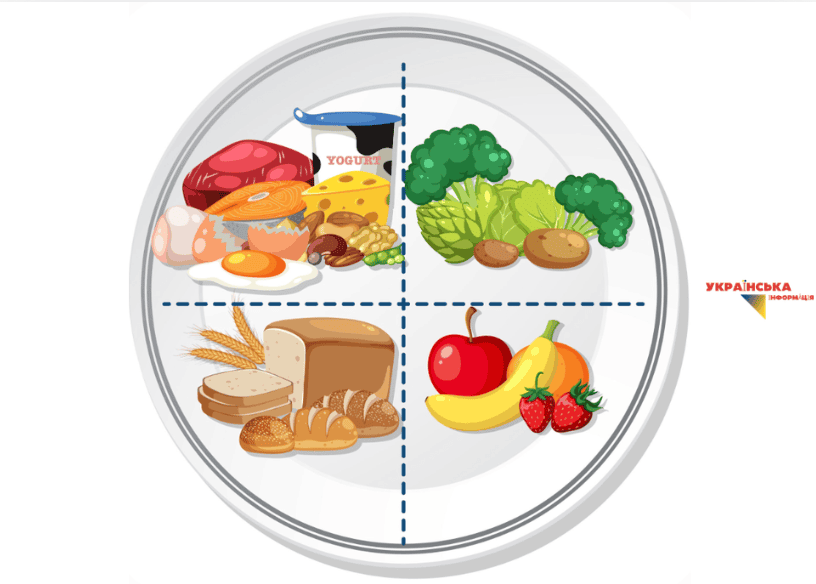
It is important to divide the plate wisely, without a “slide” in this proportion.
- 1/2 plate — vegetables and greens: A source of fiber, which fills the stomach and feeds beneficial gut bacteria.
- 1/4 plate — complex carbohydrates: Buckwheat, brown rice, quinoa, whole grain bread. They provide energy and prevent blood sugar spikes.
- 1/4 plate — quality protein: Poultry, fish, eggs, tofu, or legumes.
4. Get enough sleep and manage stress
Lack of sleep (less than 7-8 hours) also affects why you gain weight instead of losing it, because going to bed late increases cortisol levels. This blocks the fat burning process and makes the body crave fast carbohydrates — sweets and pastries — to replenish its reserves.
Read also: How to cook asparagus properly: step-by-step recipes, chefs’ secrets and culinary life hacks
Calculate your safe deficit
To understand how many calories you need, use a scientifically proven tool. It takes into account your individual parameters and calculates your daily requirement using the Mifflin-Saint-George formula :
Calorie Deficit Calculator



Tip: If your estimated deficit is less than 1200 kcal, do not go below this mark. Instead of eating even less, it is better to increase physical activity (add walks or light training). However, you do not need to immediately resort to heavy training with heavy barbells, etc., as this leads to a large loss of energy and a strong need to replenish reserves quickly and abundantly. It is better to run longer on the treadmill or walk another loop in the park.
Read also: These 6 foods will help your intestines work like clockwork
Indicative daily menu for safe weight loss
You can adjust this menu, its peculiarity is that it is created as a constructor – that is, you need to adapt it to your tastes, while maintaining the principles of combining products.
| Eating | Option 1 (Traditional) | Option 2 (Quick) |
| Breakfast | Oatmeal pancake (egg + oatmeal) with cream cheese, lightly salted fish and arugula. | 2 boiled eggs, whole grain toast with avocado, large tomato. |
| Dinner | Baked chicken thigh (skinless), a portion of buckwheat, cabbage and cucumber salad with olive oil. | A portion of lentil cream soup, a piece of baked turkey, a mix of salads. |
| Snack (optional) | A handful of almonds (30 g) and one green apple. | Unsweetened Greek yogurt with a handful of fresh or frozen berries. |
| Dinner | Baked white fish (hake, pollock, dorado) with broccoli and green beans. | Salad with tuna in its own juice, boiled egg, olives and lots of greens. |
The main secret of successful weight loss is not perfect adherence to strict rules, but systematicity. Do not indulge yourself in more than the maximum daily calorie intake allocated to you for weight loss, but also make sure that your daily diet is not less than 1200 kcal. If you eat a piece of cake once, this does not cancel out the results of the whole week. It is important to simply return to your balanced diet during the next meal, or eliminate its calories in the next meal.
Want to receive more news on this topic? Subscribe to our Telegram or Viber by clicking on the text!