
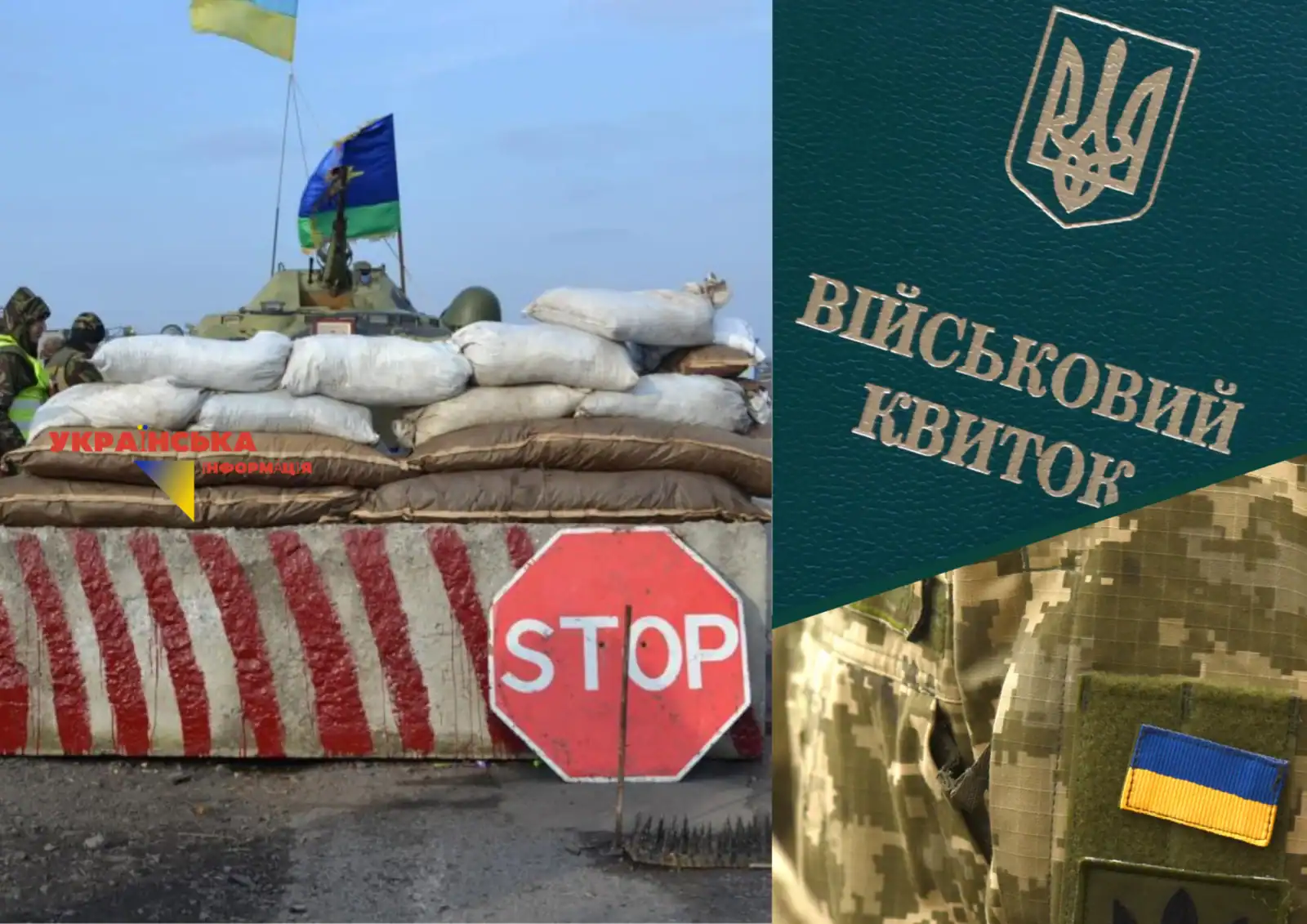
Today, the war in Ukraine has been going on for 4 years in a row, while martial law continues to operate throughout the country, including in the west with a center in Lviv and in the capital. The cities of Kyiv and Lviv have been in the zone of special enhanced control regimes since the very beginning of the full-scale invasion due to an important logistical, economic, military and other component , therefore, for additional control on the roads of important roads of the cities, new “ stationary checkpoints ” and so-called temporary (mobile) or as they are also called “ mobile checkpoints ” regularly appear .
Many drivers feel stressed before passing through a checkpoint, due to the frequent presence of mobile notification groups handing out summonses, CCC employees checking compliance with military registration rules, police, and even military personnel on such checkpoints. Therefore, drivers have a logical question: how legal is it, who has the right to stop a car, do CCCs have the right to check documents and hand over a summons, including if you are not a local resident , but only passing through the city. And there are also such frequent questions as how and what to do if they demand to provide personal documents or military documents, and in case of refusal they offer to “drive to the military registration and enlistment office”?
Read also: What to do if Reserve+ doesn’t work: a complete step-by-step guide
We analyzed everything based on the letter of the law, namely from the point of view of the Resolution of the Cabinet of Ministers of Ukraine No. 560 of 05/16/2024 (the issue of conscription of citizens for military service during mobilization) , and the Resolution of the Cabinet of Ministers of Ukraine No. 1455 of 12/29/2021 (on the procedure for establishing a special regime of entry and exit, restrictions on the freedom of movement of citizens, as well as the movement of vehicles in Ukraine where martial law has been introduced ) and our own analytics. All in order to assess the legal component of the issue, the legality of establishing and justifying the requirements at checkpoints and serving summonses without any speculation.
What is a checkpoint and is it legal to set one up in the city center?
A checkpoint , whether stationary, that is, permanent and not mobile, or a “ mobile checkpoint ” — cannot simply be an “improvisation on the spot.” This is a reinforced checkpoint , which is established exclusively by decision of the military command (the commander of the Joint Forces of the Armed Forces of Ukraine or the commandant) in accordance with the Procedure approved by Resolution of the Cabinet of Ministers of Ukraine No. 1455, the link to which we provided above, you can familiarize yourself with in detail.
Therefore, the legislation stipulates that:
- A checkpoint can be both stationary and temporary , without restrictions on cities, or central streets or bypasses, roads.
- The main condition under the legislation on the establishment of checkpoints is that the latter is set up at the entrance/exit from the territory where martial law is in force . In accordance with the Decree of the President of Ukraine On the introduction of martial law in Ukraine , it was introduced throughout the territory of Ukraine and has continued to operate to this day in all cities, including Kyiv and Lviv.
- Among the mandatory documents must be an order from the commandant (for temporary ones) or a decision from the military command on the establishment of a city, village, populated point, border strip, etc. on a certain section of the road.
- At the checkpoint, both the military and the police can work simultaneously, and sometimes – representatives of the CCC as part of the list of approved alert groups . Upon the driver’s request, the CCC employee must provide a document confirming his/her membership in the alert group (identity card) and documents confirming his/her identity.
Separately, it is worth highlighting such a concept as “ Mobile checkpoint ”, because it is not a legislative term, but an informal name for mobile notification groups of the CCC that serve summons . The law does not name it, but allows notification groups to work at checkpoints or during police patrols (according to Resolution No. 560). However, without police and without an order, this is not a checkpoint , but the unauthorized movement of a mobile notification group. Separately, we note that according to current legislative norms, a mobile group only serves summons, the detention process has the right to be carried out only by police officers.
How exactly do they stop a car at a checkpoint?
Stopping a car at a checkpoint (which is documented correctly and legally executed in accordance with the procedure we wrote about above) is a legal basis for inspection under Resolution No. 1456 (which supplements No. 1455). Driving your car through a checkpoint automatically gives you the right to:
- check your documents;
- inspect the vehicle (if there are grounds);
- to make an announcement.
Important: CCC representatives themselves do not have the right to stop cars on the road. Only the police do this ( Law on the National Police ). CCC simply joins the patrol police group at the checkpoint.
How to legally serve summonses at checkpoints (Resolution No. 560)
From May 16, 2024, summons can be served 24/7 by mobile notification groups (we emphasize: they have the authority to serve summons, only the police have the right to detain, if there are grounds for the forced detention of a conscript who is wanted). Mobile groups can also be located nearby at checkpoints (stationary or temporary) (clause 38 of Resolution No. 560).
The algorithm looks like this legally:
- The representative of the CCC mobile group must provide their full name, position, and present their official certificate of authority + passport (or officer’s ID/military ID).
- Checks the military registration document (paper or electronic in “Reserve+”/”Actions”).
- If there is a violation of military registration or a discrepancy with the “Oberig” Register, he suggests proceeding to the CCC and hands over a summons .
- If the driver is wanted, the arrest can only be carried out by police officers if they are present at the checkpoint, or upon a separate call.
- Video recording of the entire process of checking and serving the summons is mandatory (TCCs are required to record the process on a body camera).
A summons does not = mobilization “here and now” . It only obliges you to appear at the CCC within the specified time. Forcibly taking a person without a police report is illegal .
If you refuse to receive a summons, a refusal certificate is drawn up (signed by at least two witnesses). This is grounds for administrative liability (Article 210-1 of the Code of Administrative Offenses) and a fine of 17,000 to 25,500 hryvnias.
Your rights at checkpoints in Kyiv, Lviv or another city
- You have the right to demand the presentation of all identification documents.
- You have the right to record video (this is not an obstruction).
- You are not required to get into the CCC car voluntarily unless there is a police detention report.
- If the documents are in order, forced delivery to the CCC is illegal .
- Physical coercion without reason is already a crime stipulated by the Criminal Code of Ukraine .
Practical advice: Turn on the DVR + phone to record. Calmly but confidently: “Please show your ID and the grounds for verification. I will record the actions on video.”
Top 3 most common violations at checkpoints (and how to fix them)
- The CCC stops a car without police and at an illegal checkpoint .
- They do not present an ID or a commandant’s order .
- The security guard was “pushed” into a car without a protocol and legal grounds.
All these violations are recorded on video and appealed in court. The practice of 2025–2026 shows: the courts side with citizens if there is evidence.
Conclusion
Roadblocks in Kyiv and Lviv are legal if they are registered and established according to a certain procedure for the duration of martial law, summonses to them are also legal, but only if they are registered by a notification group and with clear delivery rules according to Resolutions No. 560.
No one has the right to organize “lawlessness” on the roads of Lviv or Kyiv regions or any other cities of Ukraine. The main rule is to have legal and legally “ clean documents”, updated data in “Reserve+” + video recording of the process. If you are stopped and something goes wrong, write/call military lawyers. Better one call than unnecessary problems in court with the CCC or the police.
Save this material and share it — knowing your rights saves time, nerves, and freedom.
Subscribe to daily notifications on the topic of Mobilization by clicking on this text in Viber!