
I once went to the doctor and asked him, “If I eat right, exercise in the gym, go for walks every day, and don’t eat sugar, can I assume that this compensates for the lack of sleep I get due to work and a busy schedule (sometimes I go to bed after midnight, and sometimes after three in the morning)?” To which my doctor replied that
Once I was at the doctor’s and asked him “if I eat right: I eat, I train in the gym, I go for walks every day and I don’t eat sugar, can I assume that this compensates for the fact that I don’t get enough sleep due to work and a difficult schedule (sometimes I’m up after midnight, and sometimes after three in the morning)”. To which my doctor replied that all of the things I listed above do not even half compensate for what Quality Sleep gives. And the explanation here is simple, good sleep is one of the most powerful tools for health, energy and longevity.
Most people underestimate the importance of sleep, believing that “you can sleep later,” as I often say, or “sleep is for lazy people, we need to work.” However, science clearly proves that chronic sleep deprivation destroys the brain, immunity, hormonal balance, and even accelerates aging. In this article, from my own experience, I will share how to sleep properly and we will consider how healthy sleep is arranged and what methods really work to improve it.
Read also: Eye health: why vision deteriorates and how to preserve it forever (a scientific view)
Why quality sleep is more important than you think
Many of you probably know that during sleep the brain does not “turn off” – it is actively working. And sleep is not just a big and important part of our lives, many processes occur in the brain during the night while we sleep:
- Nerve cell regeneration
- Cleansing the brain from toxins
- Memory pinning
- Hormone regulation (cortisol, melatonin, leptin, ghrelin)
- Restoring the immune system
According to the American Academy of Sleep Medicine, chronic sleep deprivation increases the risk of:
- Obesity by 55%
- Type 2 diabetes by 40%
- Hypertension by 30%
- Depression and anxiety disorders
References to scientific sources that were the basis for the preparation of this material
- Sleep Foundation (official resource of the American Academy of Sleep Medicine) Article: “Why Do We Need Sleep?”, Link: https://www.sleepfoundation.org/how-sleep-works/why-do-we-need-sleep
- Cappuccio FP et al. (2010) — one of the most famous meta-analyses Title: Sleep duration and all-cause mortality: a systematic review and meta-analysis of prospective studies, Link: https://www.ncbi.nlm.nih.gov/pmc/articles/PMC2864873/
- Grandner MA et al. (2016) Title: Sleep: A Silent Contributor to Cardiometabolic Disease, Link: https://www.ncbi.nlm.nih.gov/pmc/articles/PMC4891924/
Therefore, proper sleep is not a luxury, but a basic need for the body.
How sleep works: phases and cycles
Healthy sleep consists of cycles lasting 90–110 minutes. Each cycle includes:
- Phase N1 — light sleep (5–10 min)
- Phase N2 — light sleep (50% of total sleep)
- Phase N3 — deep slow-wave sleep (body recovery)
- REM phase — fast sleep (reduced muscle tone, active brain activity, dreams)
Ideally, you should go through 4–6 full cycles per night (7–9 hours of sleep). Although it is pleasant for us to watch dreams (if they are good, of course), by the way, if you have nightmares, it is often because you are freezing in the spring and your brain is specifically drawing terrible pictures to wake you up (these are instincts that were laid down in our farts to prevent freezing in the cave when the fire went out, or when there was danger nearby, and therefore it has now been passed on to us).
12 scientifically proven ways to improve sleep quality

1. Maintain a clear sleep schedule .
Although this advice seems banal, it is “archeologically important”. Go to bed and get up at the same time, even on weekends. This stabilizes circadian rhythms. And you should go to bed before 10:00 PM, because at this time the functions of stabilization and improvement of the body’s health begin to recover and work best (such “hormones of youth and beauty” are produced).
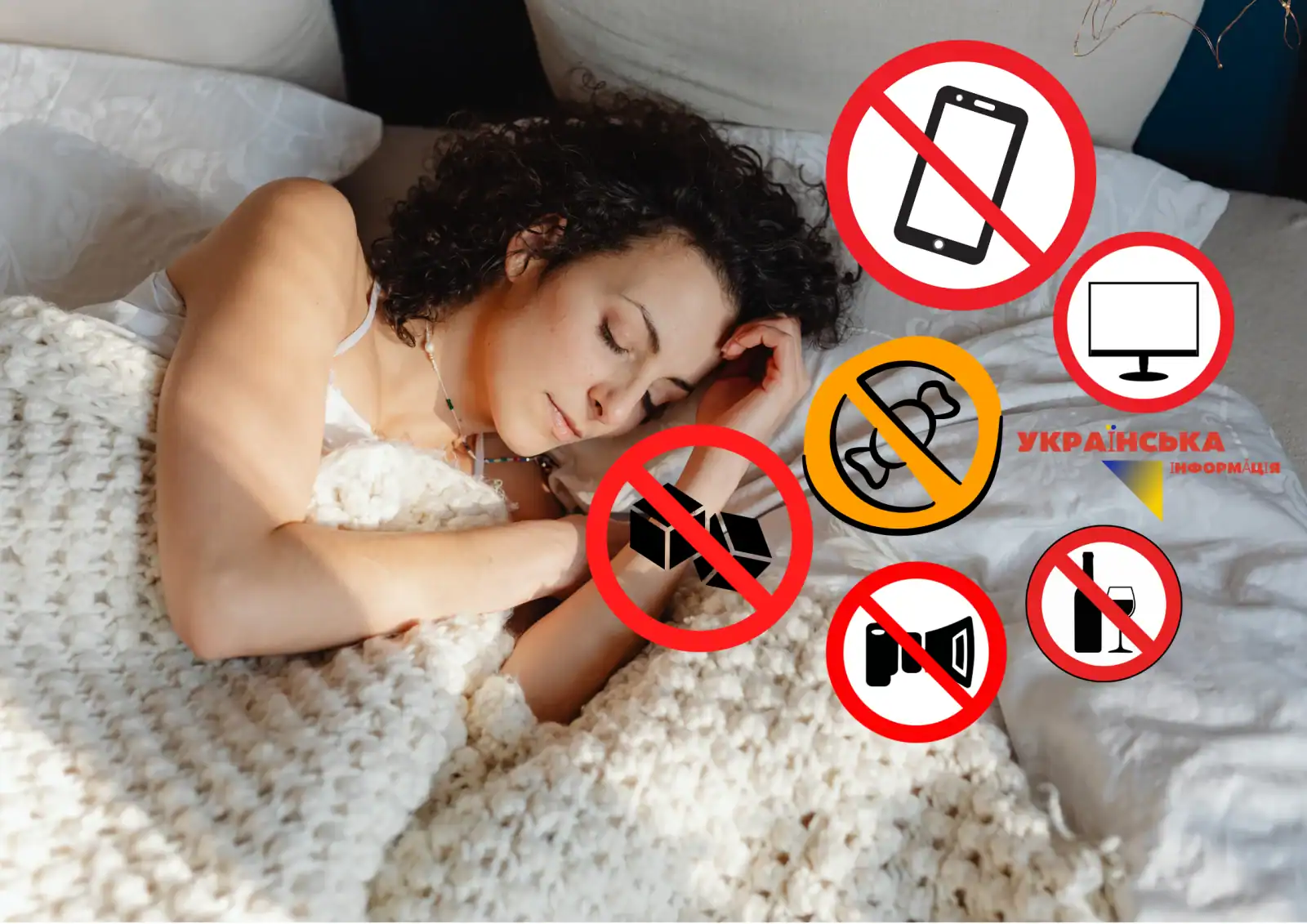
2. The 10-3-2-1-0 Rule (Sleep Foundation Research)
The phrase 10 and then 3, 2, 1, 0 is easy to remember and sounds like a sports call to action.
- 10 hours before bed — no caffeine
- In 3 hours — without food
- In 2 hours – no work
- In 1 hour — without gadgets
- Press “5 more minutes” 0 times
This is how you can prepare your body for ideal rest and sleep.
3. Avoid blue light in the evening
Blue light from screens blocks the production of melatonin (the sleep hormone). A study by Harvard Medical School showed that using gadgets before bed can shift your internal clock by 1–2 hours. If you, like me, really need to work a little longer, then I advise you to buy special glasses to protect against the violet radiation of gadgets. If you don’t have extra money, then switch the screen to night mode or a yellow background, this reduces violet radiation.
4. Optimal room temperature
Probably many people like me when the apartment or house is warm or even hot. However, the bedroom should be cool. The best temperature for sleeping is 16–19 °C. At higher temperatures, deep sleep is significantly reduced or it is difficult to fall asleep at all.
5. Use light correctly
Bright daylight in the morning, warm, subdued lighting in the evening. This way, the body understands when to wake up and when to prepare for sleep.
6. Physical activity
Regular exercise improves sleep quality, but no later than 3 hours before bedtime. This is understandable, because exercise is tiring and requires more rest and an early bedtime.
7. Magnesium and proper nutrition before bed
Magnesium, glycine, L-theanine and apigenin help you relax. Avoid heavy meals 3 hours before bedtime. It is also a good idea to cut off water close to bedtime so that you don’t interrupt your sleep by going to the bathroom during the night.
8. The “4-7-8” breathing technique (developed by Dr. Andrew Weil)
Inhale for 4 seconds → hold your breath for 7 seconds → exhale for 8 seconds and so on for 5-10 minutes. Helps to fall asleep quickly if you are very excited or “on your nerves”.
9. Cognitive Behavioral Therapy for Insomnia (CBT-I)
According to a Cochrane Review, CBT-I is the most effective treatment for chronic insomnia — more effective than medication. In general, the therapy works to identify and change negative thoughts or myths about sleep. It also changes behavioral factors, such as when you should only be in bed when you go to sleep, etc.
10. The right mattress and pillow
Sleep is not just about a soft bed. It is important to remember to support the spine in its natural position, and the right pillow is critical for quality sleep without straining your neck or tilting your head back.
11. Avoid napping for more than 30 minutes during the day.
A long daytime nap disrupts the night-time cycle. Therefore, often when you nap during the day, you can’t fall asleep at night.
12. Create a bedtime ritual
Reading a paper book, taking a warm bath, meditating, or keeping a gratitude journal. This is a signal to the brain that it is time to sleep. Once you have developed a habit, it is much easier to convince the brain to “switch off and sleep” after a familiar ritual.
Sleep myths that are still believed
- “You can sleep in on the weekends” – sleep is not about the number of hours of sleep, and if you sleep two hours longer on the weekends, it compensates for the early rise at 5 am on Tuesday and Wednesday during the week.
- “If you don’t get enough sleep, the brain will get used to it” – indeed, the human body can get used to many things, but sleep is not about a habit, but about a critical necessity for recovery and health (therefore, 7-8 hours of sleep is not a habit, but a must).
- “Alcohol helps you fall asleep” – Alcohol has the opposite effect and is the biggest myth about helping you sleep. After all, in a state of alcoholic intoxication, the brain does not receive enough oxygen, that is, it actually dies, as a result, the body fights toxins, all organs work at maximum, while you are “in a blackout” the body, instead of resting, uses all its strength to stabilize your condition and bring the body’s functions back to normal. When you wake up from a hangover, you feel so bad not because you had a good rest, but on the contrary, the body did not have time to rest because it was fighting the consequences of alcohol poisoning.
- “The older you are, the less you need to sleep” – sleep does not depend directly on age, with the exception of growing children, but on the needs of each individual organism, lifestyle and rhythm, etc.
Conclusion + tips for quality sleep
So, based on everything described above, I hope you understand that quality sleep is not a luxury, but an investment in your health, productivity, and emotional state. Start small — and in just 2–3 weeks you will feel the difference.
How to improve your sleep today: Set a fixed time to wake up and go to bed, at this time turn off and put away your gadgets 1 hour before bedtime, take a shower or other ritual before going to bed, while cooling the room to 16–19 °C, use a breathing exercise if you are still nervous or worried, but do not get stressed at least 3 hours before bedtime. Don’t forget to exercise (but not late at night) and track your sleep (you can do this with the help of special gadgets or apps.