

The daily stress that seems to persist since the start of the full-scale invasion in February 2022? You seem to be trying to live with it or stop it with your daily routine, but it still doesn’t work. This intensifies the irritation and the psychological fatigue from the war grows even stronger. However, our lives go on, family, work, meetings and even volunteering require self-control and
Daily stress that doesn’t seem to go away since the start of the full-scale invasion in February 2022? You seem to be trying to live with it or stop it with your daily routine, but it still doesn’t work. This irritation intensifies and the psychological fatigue from the war grows even stronger. However, our life goes on, family, work, meetings and even volunteering require self-control and self-discipline, so in this article we have prepared simple exercises to stabilize your moral and psychological state, so that you can return to normal life without nervous breakdowns. This article was written on the recommendations of psychotherapists who practice daily in providing professional assistance to Ukrainians who have been psychologically affected by the war, to whom our editorial team turned to provide professional recommendations on overcoming psychological exhaustion from combat operations and their consequences for Ukrainians today.
Ask yourself: is there a real threat to your life right now?
When we feel anxiety every day that seems to sit somewhere deep inside us, we need to understand its causes. What exactly is causing us anxiety?
First tip , stop, relax, choose a comfortable place to “think” and, being alone with yourself, ask yourself:
Is there a real “direct” threat that I or my family should fear right now?
A real threat should be understood as one that at this specific moment, when you are asking yourself this question “right now,” something can harm your life and health. This can be direct (not “imaginary” a few kilometers away, but real – right next to you) proximity to a place where hostilities are taking place, where violence is being committed (which threatens you or your family), and so on.
If the answer to your question is: Yes.
Then you should immediately think of a way and take measures to stop the existence of such a real, constant, unavoidable threat, for example: leaving the place of threat – temporarily while the real threat exists. Moving to another place is also stressful for many exhausted and depressed people, but it will only create certain “short-term” problems for you, after the move it will end, and for your psychological health in the long term everything will be much better than experiencing endless fear. In addition, as you know, constant stress leads to a decrease in immunity , which in turn leads to various diseases.
If the threat you fear is “hypothetical”
That is, when nothing is being blown up or exploded near you right now. However, there is a possibility that in a few hours the air raid warning will be announced again and then the danger will become real.
Then act wisely, go down to the shelter. While there, if the anxiety remains, ask yourself the following question: Am I now safe and in a protected place? By answering this question to yourself, you calm your body and begin to think rationally, leading your thoughts from chaos to a logical direction, without panic and subconscious fear, which appears due to the feeling of uncontrollability of the situation and complete uncertainty of actions. In addition, compared to the first case, here you have a clearly defined time frame, an understanding that the air anxiety will not last indefinitely, but will end in a few hours and life will return to its usual rhythm.
Emotional and psychological burnout from war, what to do?
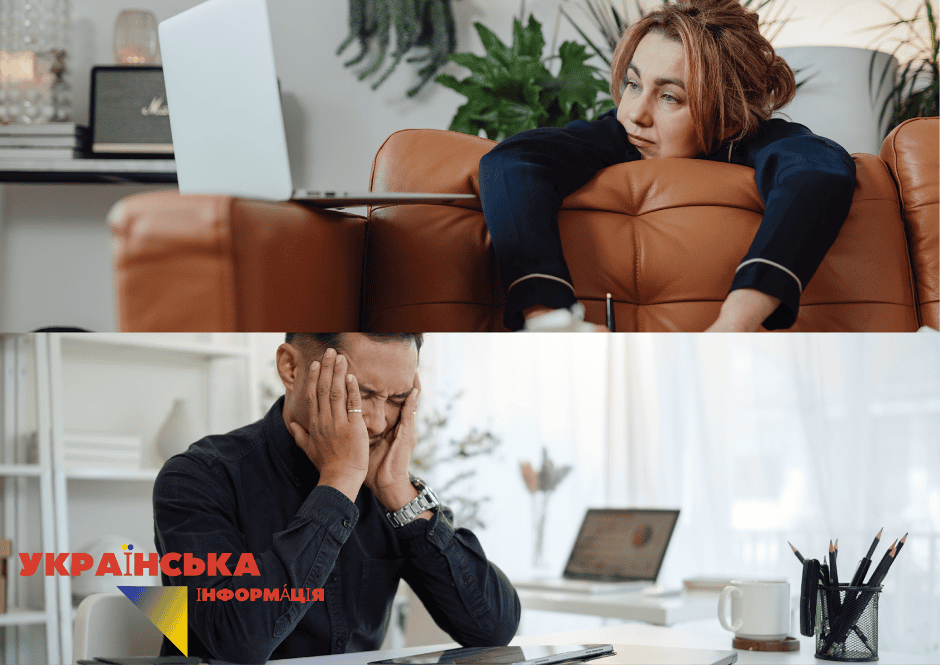
If in the first chapter we explained how to get rid of the instinctive fear that is inherent in every living person in the face of an uncontrolled situation and time uncertainty, and told how, using simple questions to yourself or active actions, to make it controlled by you and with clear time frames, which gives a positive signal to the brain, removes anxiety and creates psychological support for mental health.
In the same section, we will talk about what exercises to use to stabilize the psycho-emotional state, which is undermined by ordinary everyday problems that existed before the war, right now in combination with the daily consequences of the war, such as power outages, lack of sleep due to air raids, long waits for the end of the day in not always comfortable shelters, unstable communication, lack of rest, and so on. This creates an increased effect of psychological pressure and even nervous breakdowns from minor stimuli. Then the people around us also suffer, mostly our dearest and most beloved children, parents, friends, colleagues, and even ordinary passers-by.
Reducing psychological fatigue from the war that has been going on for 4 years cannot be done instantly with simple breathing exercises 2 through 4, 10 repetitions, or by searching for 5 small objects in the apartment ; it requires long-term and systematic actions.
Read also: Top 5 AI-based assistant apps for your smartphone
Method for identifying and eliminating stimuli
Identifying the triggers of your psychological state is not always easy when there are many of them, or they are all small household items, and especially if they are all in a pile at once. Everyone has their own triggers, somewhere it is lack of sleep which then affects the whole day, then you need to make it a habit to go to bed earlier no matter what, so at 22-00 you are already in bed. Sometimes it is stress at work, then try to agree on partially remote work from home. Sometimes the trigger is the banal noise of neighbors after 9 pm, here you should not be shy and call the police, maybe next time it will not be there. All these little things have a general effect of accumulation, the level of stress, due to which anxiety and irritation will be connected.
For example, as the author of the article, I personally use this method and will tell you my experience. Since I live in Kyiv and work in the center, I have to get through traffic jams every day, and sometimes due to a long air traffic alert, you don’t sleep all night, you wait in a shelter, and then everyone goes to the center to work. You didn’t get enough sleep, you sat in a cool shelter all night, your mood is already spoiled, but you hold on for now, then when you get in the car to go to work in the center, and there’s a ton of cars, everyone is in a hurry because they’re late, they break the rules, they cut you off, and here your mood is already bad and you just “tear yourself apart from the inside”, as a result, upon arriving at work, your moral and psychological state is undermined from the very morning, the day doesn’t start, conflicts at work begin, productivity is low, and then it’s gone. Therefore, realizing that the journey to work after a long, stressful night without sleep is usually my last straw, I started using public transport these days. The journey by metro takes me even faster, and at the same time I have time to read the latest news or think about my own life while riding in the car. My body adjusts to the work process, and I come to the office to work without haste.
Systematic method
You constantly don’t have time, there’s not enough time again, it would be better to plan it an hour earlier, etc. Our stress and anxiety level accumulates due to the lack of a certain stability, because then the body does not rest and constantly mobilizes resources to, that is, to control everything, to have time, etc.
That is why the military and other formations have a system method. Everything is clearly on schedule, all basic things must be done on time, then everything else. It is not about “driving yourself into a framework”, but on the contrary, using a certain model, plan events as you would like. For example, clean the house on Wednesdays, because then I have a day off, and the children are at school. I will wash the dishes immediately after eating, so as not to accumulate a mountain of dirt in the kitchen. My son now has to put things in their places on his own, immediately after school, because he is already an adult and must monitor his own order and be neat, he came immediately checked and hung things up so that tomorrow he would not have to iron. Simple implemented system things will help you get rid of daily irritants that are guaranteed to spoil your mood, a mountain of dishes came from work, the child’s things are scattered and wrinkled and need to be washed, and other little things that together create chaos without control.
Rest + conclusion
It seems that such a simple thing, which is an integral part of human nature as rest and time for oneself, has begun to be completely ignored with the beginning of full-scale work. Many may even say that there is neither money nor time for this, and in general it is not the time. But here we will talk about the basic human need. We cannot work constantly, but we have at least time a day to take care of ourselves and sleep. Our health directly depends on whether we rest and whether we take care of our health in our free time. For this, you do not need to go on tours abroad every month, just an evening walk, a morning jog, time to take care of yourself at home in front of the mirror is enough.
While you take care of your physical body, you can satisfy your spiritual side by reading books, watching movies, playing Monopoly with friends. All of this will increase your dopamine levels , which will improve your mood, energize you, and relieve stress and anxiety. If you take time for yourself and do it consistently, you will notice a change in your attitude towards what previously seemed like an emotional disaster.
Read more about how to overcome fatigue and stress on Telegram [click here to read]