Everyone thinks that when the cold days and frosty nights of autumn come, when the harvest is harvested, and the leaves have already begun to cover the ground in a rich layer, then the gardening and horticultural season can be considered complete. However, professional gardeners in the fifth generation know that right now comes one of the most responsible stages of caring for and caring for plants for a new abundant harvest, this is autumn pruning of trees . If this is not done for a long time or this procedure is ignored altogether, then the trees will eventually become weakened, will have a risk of breaking under their own weight with fruits, or under a tent of snow and ice in winter, and they will also be very vulnerable breeding grounds for infections in dry branches.
In this article, we have prepared the best advice from a fifth-generation gardener. After reading this material, you will learn how to properly prune trees in the fall, what to do to increase their fertility and lay the foundation for memories for many years to come. We will analyze in detail the optimal timing, choice of tools, cutting techniques and the specifics of working with different trees: apple, pear, peach, walnut, apricot, and cream.
Read also: These 6 products will help balance your diet — nutritionist advice
Why prune trees in the fall: benefits and goals
Properly preparing your garden for winter is a new stage in the quality and cycle of plant strengthening. Autumn tree pruning, as gardener Mykola explains to us, has three main goals:
- Sanitary pruning of trees. Removal of broken, diseased, lichen-infected or pest-infected branches. This rids the tree of infections and diseases.
- The shape is correct for ripe large fruits. Thinning the crown provides better ventilation and access to sunlight in the coming season. This gives higher quality and size of fruits.
- Rejuvenating effect. Removing old branches stimulates the development of new, strong shoots.
Why does pruning a tree affect next year’s harvest?
By getting rid of diseased shoots and excess growth, the tree redirects all nutrients to the root system and healthy buds. This not only improves the plant’s immunity, but also promotes the formation of strong flower buds that will produce large and juicy fruits of apple, pear, peach, apricot and plum.
Optimal timing for autumn pruning: when to start and when it’s too late
One of the most common questions that gardeners ask Nikolay is: when to prune trees in the fall so as not to harm them? The main rule is to let the tree slowly enter a state of biological dormancy.
- Sign of readiness #1: Massive leaf loss. Pruning can only begin when the tree has shed more than 50-70% of its leaves. By then, it has already gone dormant. It will not feel the pain of losing shoots.
- Sign of readiness #2: Cessation of sap flow. During this period, the movement of nutrients from the crown to the roots is completed, so wounds do not “cry” and heal safely.
Temperature regime
Mykola says it is very important to have time before the first real frosts hit or a stable winter season arrives. Wood at sub-zero temperatures becomes brittle, cuts come out torn, and wounds do not have time to dry out, which sharply reduces the winter hardiness of the plant. Work should be stopped if the air temperature drops below -3…-5 °C. It is better to postpone it for another year if you do not have time, because the tree will be lost.
Read also: Underrated meat that scientists are increasingly paying attention to
Calendar reference (depending on the weather):
- Northern and western regions: mid-October – early November.
- Central regions: late October – mid-November.
- Southern regions: November to early December, if the autumn is warm.
Garden pruning tools: how to work safely
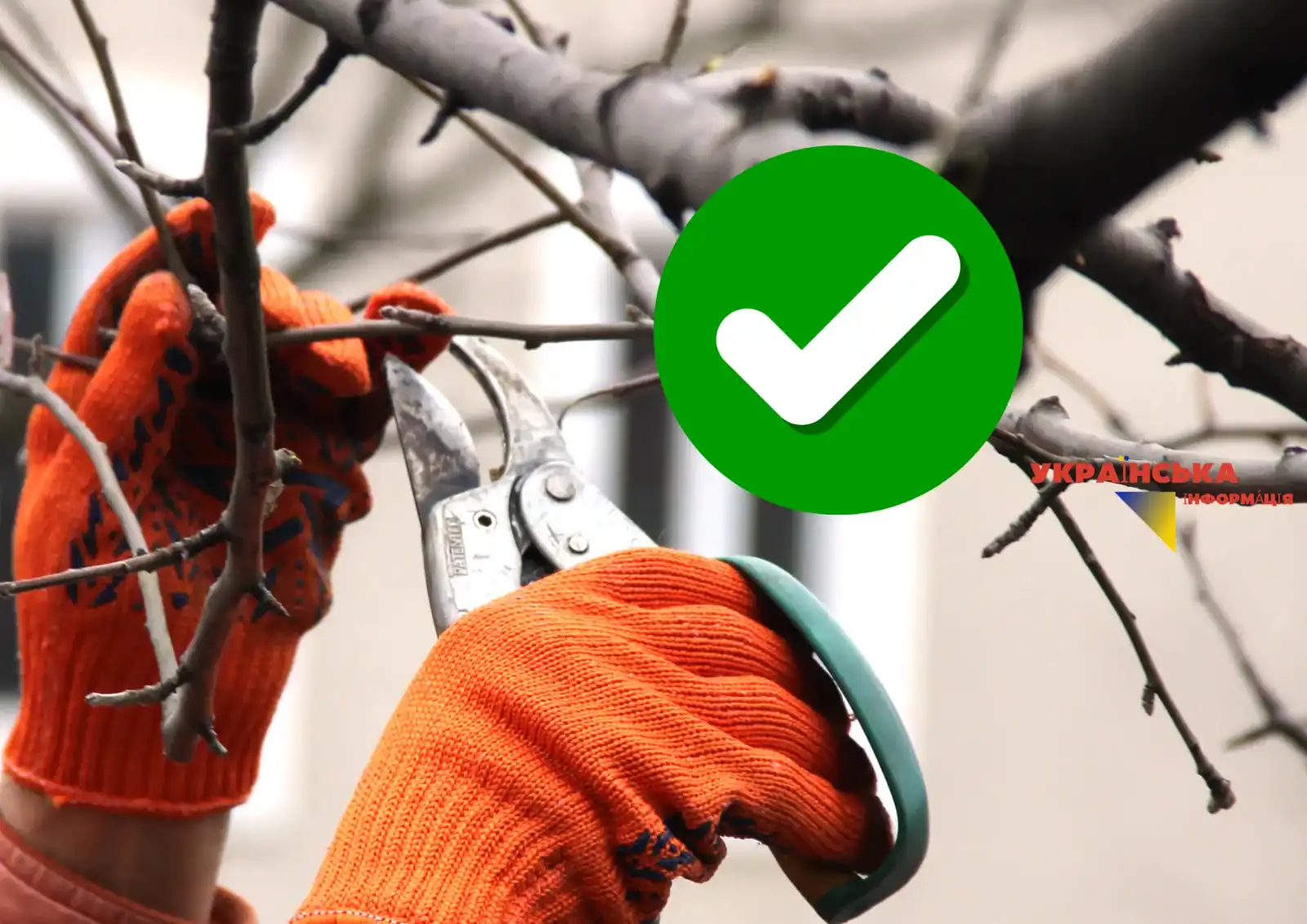
High-quality equipment without rust, fungus, or mold is half the battle, says Mykola. Using a blunt or rusty tool leads to scratches in the bark, where pathogenic fungi instantly enter. Here is his instruction on which tool to use for its intended purpose.
| Tool | Appointment | Tool requirements |
| Secateur | For cutting thin branches up to 2-2.5 cm in diameter. | Should leave a smooth, clean cut without crushing the wood. |
| Branch cutter (branch cutter) | For branches with a diameter of 3-5 cm that are difficult to reach. | Long handles create leverage, reducing the gardener’s effort. |
| Garden saw (hacksaw) | For thick skeletal branches (5 cm and more). | It should have a special tooth profile for cutting “on itself” without getting clogged with sawdust. Do not use construction saws! |
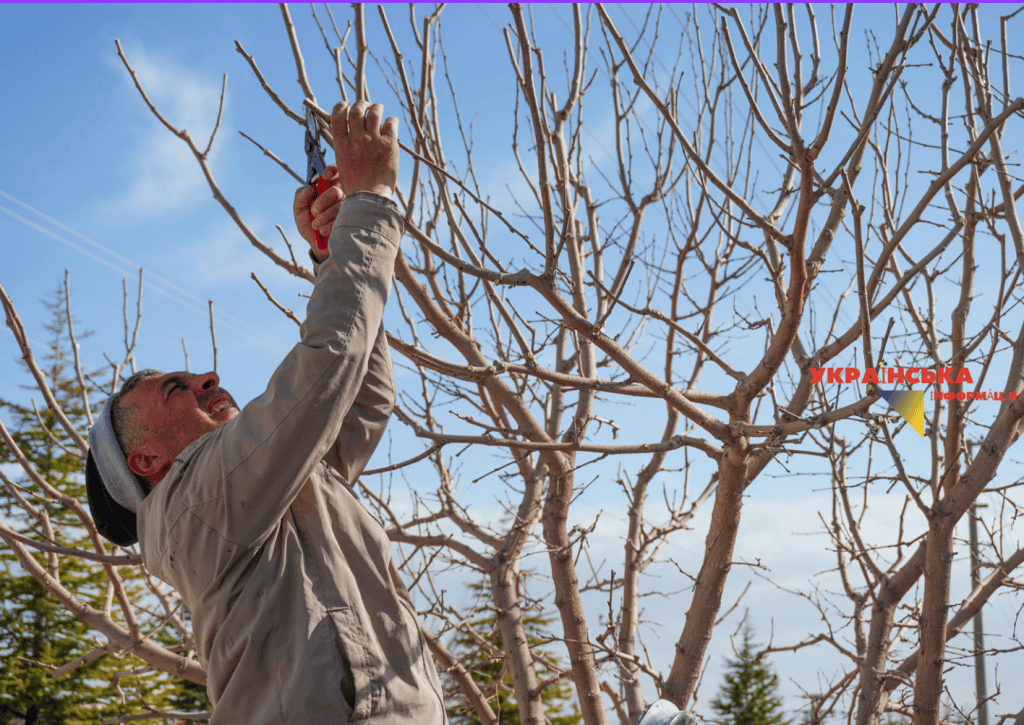
According to Nikolay, the mandatory rule for any gardener is: Before starting work and when moving from one tree to another, be sure to disinfect the blades (with medical alcohol, potassium permanganate solution, or chlorhexidine). This will protect the garden from transferring bacterial burns, infections, diseases, and black cancer.
Step-by-step technology: how to properly prune trees in the fall
According to gardener Nikolay, for pruning to be beneficial, it is important to know exactly how to make a cut.
The “ring” rule is used when a branch is completely removed. At the base of each branch there is a ring of cells that are capable of rapid division. The cut is made strictly along the outer edge of this ring.
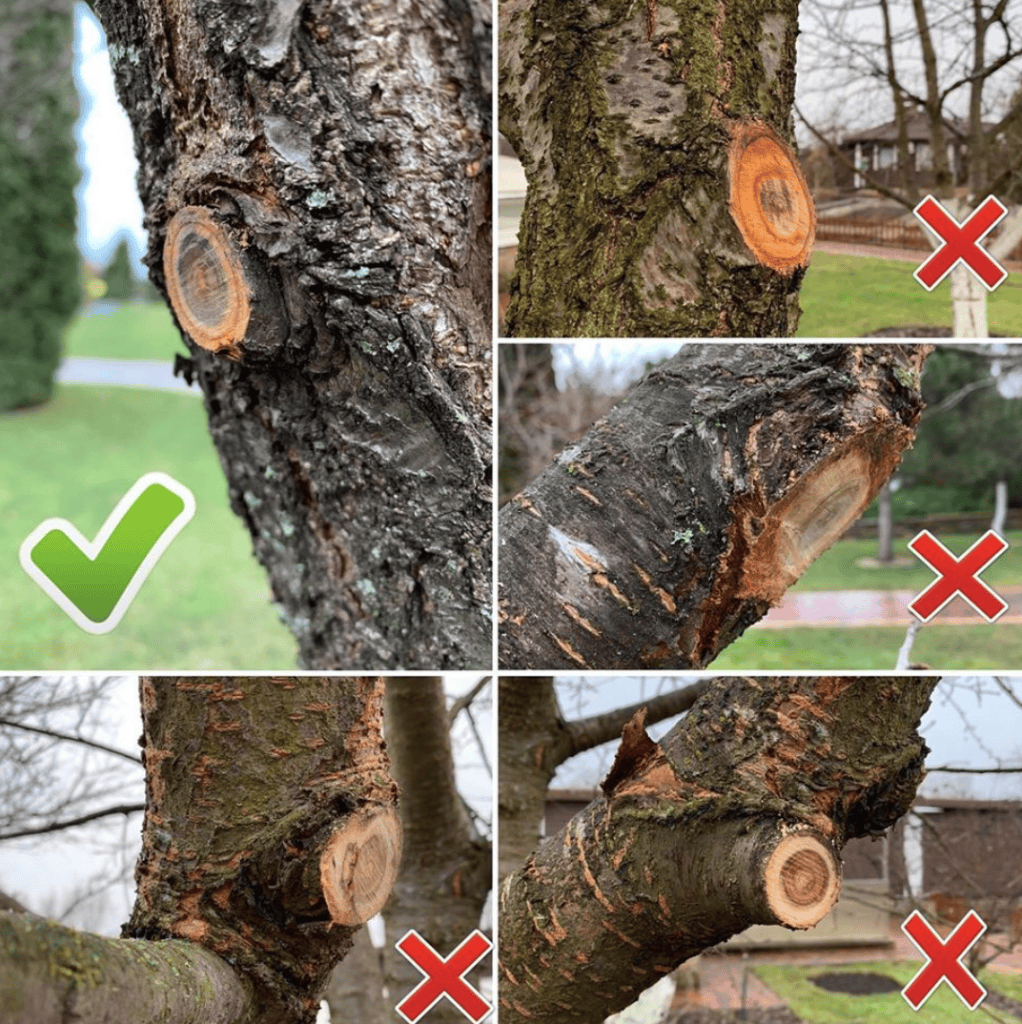
Mistake: Leave the stump (it will rot and form a hollow) or cut too deep into the trunk (a huge wound that takes a long time to heal).
The “bud” rule, as Mykola and other professional gardeners call it, is explained to us as being used to shorten a shoot. The cut is made at a 45-degree angle above the outer bud (the one that faces the outside of the crown, not the inside). This will set the correct direction for the new branch to grow.
Step-by-step algorithm of actions
- Start with sanitary cleaning: Cut off all dead wood , as well as broken and diseased branches.
- Remove competitors: Cut off shoots that grow vertically upwards (spires) and those that cross and rub against each other.
- Clean the bottom: Completely remove the root suckers and shoots growing below the grafting site – they only suck the sap and take nutrients from the trunk without providing any benefit.
- Lighten the crown: Remove branches that grow into the crown (thickening it). The crown formation should be such that the bird can freely fly through the branches, clean the tree of pests, insects, beetles and parasites, and fly on.
How and what to treat tree cuts and wounds in autumn
Any processing of tree cuts in the fall is carried out only on dry wood.
- Garden varnish – sold in garden stores, a classic option, but apply it in a very thin layer so that the wood can “breathe.”
- Garden pastes and balms (with added fungicides, also sold in home and garden stores) are a modern and more effective alternative. They do not harden in the cold and disinfect well.
- Oil paint – only paints based on natural drying oil can be used.
It is important, says Mykola , that cuts up to 1-1.5 cm in diameter do not need to be treated, they will heal on their own. Large wounds are always treated!
Features of pruning different types of trees
Different crops respond differently to autumn intervention. Stone (cherry, sour cherry, sour cream) and pome crops ( apples, pears ) require radically different approaches on the eve of winter.
Pruning pome crops
Pruning an apple tree in the fall and pruning a pear tree in the fall are a must for every gardener, “a classic of gardening, as Mykola, a professional gardener in the fifth generation, says.” These trees are the most hardy and tolerate autumn shaping perfectly.
- Apple trees are thinned by removing suckers and limiting the growth of skeletal branches.
- In pear trees, branches tend to stretch rapidly upward, so they need to be transferred to lateral shoots, expanding the crown.
Pruning stone fruits
Many people are interested in: is it possible to prune cherries in the fall , as well as plums, apricots, and sweet cherries?
Agronomist Nikolay’s answer: You need to be as careful as possible with stone fruits. They are prone to gumminess (resin secretion) and are less tolerant of frost after injury. In the fall, only light sanitary pruning is allowed for them (removal of dry and diseased branches). It is better to postpone deep crown formation to early spring, when it has warmed up and new severe frosts are no longer predicted, otherwise you risk losing the tree.
Pruning young and old trees
- Pruning young trees in the fall (up to 3-5 years old) should be minimal. Its purpose is only to lay the correct skeleton (branch tiers). Excessive intervention can weaken the seedling before winter, or even lose the entire young tree.
- Pruning old trees (rejuvenation) is done in stages, you don’t need to cut off 30% of the branches you don’t like at once. You can’t cut off more than 30% of the tree’s mass in one year, otherwise it will get a shock and may die. It is better to stretch a strong rejuvenation over 2-3 seasons in years.
Top 5 mistakes novice gardeners make during autumn tree pruning
- Rushing with deadlines. You always want to do something quickly and forget. However, pruning a tree with green leaves provokes the growth of new shoots, which are guaranteed to freeze in the winter and this can lead to the loss of the tree.
- Leaving stumps. This is a direct path to rotting of the core of the trunk and, as a result, the end of the tree’s life.
- Working in sub-zero temperatures. Causes bark cracking and fatal wounds.
- Ignoring disinfection. They cut off a diseased branch, and then cut off a healthy one with the same pruner. This spreads fungal spores throughout the garden and as a result, all the trees can die.
- Excessive pruning. Removing too many healthy branches deprives the tree of nutritional reserves for the winter and triggers internal destruction (like a domino effect).
Frequently Asked Questions (FAQ)
Can trees be pruned after the first frost? No. If the first frost has already arrived and the temperature is consistently below -3°C or lower, start pruning late, it is better to postpone it until next year or spring (for bone trees). The wood becomes brittle, and the wounds do not have time to heal and simply freeze in the cold.
What to do if sap leaks after pruning? This rarely happens in the fall, only if you started the procedure too early (before the end of November or before the tree hibernates). If this happens, dry the wound for 1-2 days and carefully apply garden balm to avoid damaging the tree.
What is the difference between spring pruning and autumn pruning? Autumn pruning is mainly aimed at rehabilitation, preparation for winter, and basic thinning. Spring pruning (before bud break) is the best time for radical crown formation, rejuvenation, and detailed work with stone fruits.
Read also: Recipe for how to cook chicken liver correctly and tasty: secrets of tenderness and the best sauces
Conclusion
Proper autumn tree pruning requires many mandatory elements, firstly, wait for mass leaf fall, secondly, use sharp and disinfected tools, and also do not leave stumps and carefully process large cuts. After completing the pruning, be sure to remove all branches from the site, carry out moisture-charging watering and mulch the trunk circles!
Want to receive more news on this topic? Subscribe to our Telegram or Viber by clicking on the text!