
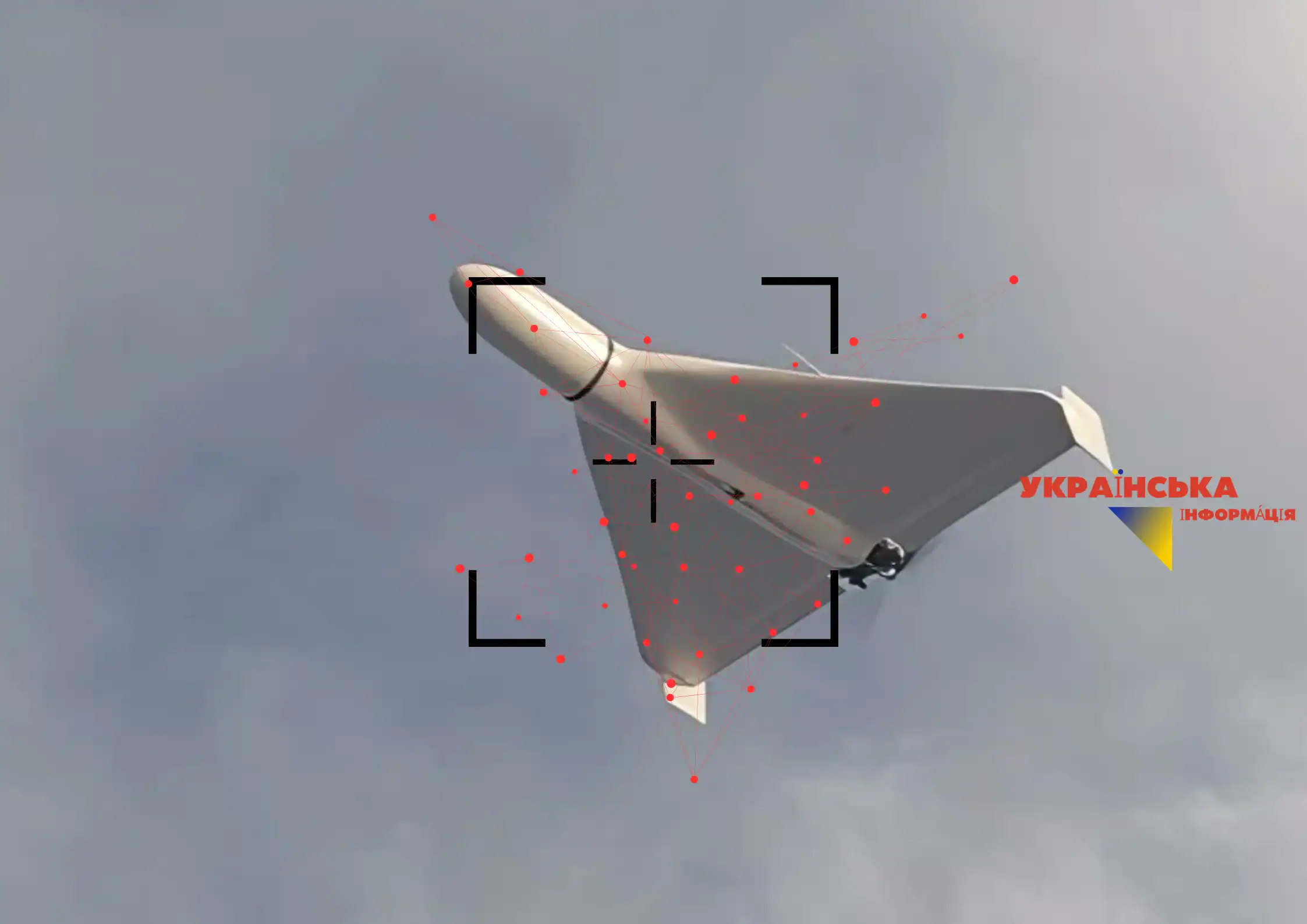
Ukraine launched Brave1 Dataroom with Palantir and opened millions of real combat videos for AI training. Autonomous drones and ground robots are already changing the rules of the game. How does it work, why are we ahead in this niche where there are not so many strong competitors yet and what to expect by the end of 2026 — a detailed analysis further from “Ukrainian Information”.
Ukraine launched Brave1 Dataroom with Palantir and opened millions of real combat videos for AI training. Autonomous drones and ground robots are already changing the rules of the game. How does it work, why are we ahead in this niche where there are not so many strong competitors yet and what to expect by the end of 2026 — a detailed analysis further from “Ukrainian Information”.
Why did 2026 become a turning point in AI for military operations?
In general, in the world, 2026 entered the history of defense technologies as an inevitable moment, the US military actions in the Middle East with Iran, as never before proved that AI analysis and coordination is the third “eye”. But few people know that Ukraine officially became the first country in the world to provide real combat data for training artificial intelligence. To understand why this is important, it is necessary to explain how artificial intelligence learns and practices. It analyzes millions of scenarios that can happen, remembers a certain ideal order of action and executes it at the right moment. It is easier to explain this using the example of an unmanned taxi. If a driverless taxi is driving through the city and an animal runs out onto the road, the AI that controls the vehicle understands this “baseline scenario” and takes the action programmed for such a scenario, i.e. brakes (if the distance allows – it also learned this using video data from video recorders around the world), or simply moves the car to the side so as not to hit the animal (just like drivers around the world do when the situation does not allow for another scenario of actions). That is, if it were not for millions of hours of video recorder filming around the world, an AI-based (machine learning) unmanned taxi would not work.
Launching Brave1 Dataroom – a story from scratch
The launch of Brave1 Dataroom in January 2026, together with the American company Palantir (a company engaged in artificial intelligence-based automation for various types of solutions), opened access for robotic learning to millions of annotated videos shot on the battlefield in Ukraine (Donbass and other hot spots) and other images from the front.
The Minister of Defense of Ukraine, Mykhailo Fedorov, directly stated: “Artificial intelligence is becoming a decisive factor on the modern battlefield.” This phrase is not just words — behind it is a platform that allows Ukrainian developers to train autonomous drones Ukraine 2026 and ground robotic complexes on real war data, not on simulations. So that in the future, people, as the most valuable resource, are involved only to control machines. Everything else will be done by robotic complexes trained according to scenarios.
Right now, when Russia is actively switching to drones with AI vision + online analytics, Ukraine is responding symmetrically: AI on the front 2026 is moving from experiments to preparing a scenario for mass use in real situations on the battlefield and beyond. This is already yielding the first results in intercepting enemy UAVs and logistics. By the end of this year or at the start of 2027, autonomous systems can radically reduce personnel losses by taking on complex and risky combat missions.
Note: Yes, there will not be a full replacement of people yet, we are not able to replace all people in all positions in the troops on the front line in such a short time, but this decision will allow us not to take risks where it is extremely dangerous, but without this there will not be enough protection.
What is Brave1 Dataroom and how Ukraine opened up combat data for AI
Brave1 Dataroom is a secure digital environment launched on January 20–21, 2026 within the framework of the Brave1 cluster together with the Ministry of Defense , the Ministry of Digital Transformation, the Armed Forces of Ukraine, the Research Institute of Military Intelligence, and Palantir. The platform is built on Palantir software and already contains structured visual and thermal datasets of air targets, including enemy Shaheds. The AI’s task will initially be to learn how to defend the sky, after which this technology can be extended to more complex tasks in the defense of Ukraine.
How does it work now?
Ukrainian military personnel daily capture and collect real photos, video materials and tritical data from the front (video of FPV drones, thermal imagers, radars) for training. These arrays are anonymized and uploaded to Dataroom. After a mandatory security check, developers gain access and train their algorithms directly in combat conditions. That is, they teach AI to work out the algorithm in each scenario as a living person would do and even better, since the following factors are excluded: fatigue, physical limitations of human muscle strength, poor visibility due to weather conditions such as a foggy night (thermal vision is enough for AI).
The goal is not simply to teach a robot to be a human replacement, the main goal is to accelerate the creation of autonomous systems that are better than humans at detecting, identifying, and intercepting targets without the participation of an operator. I repeat, the focus is currently on drone interceptors in the air, but there is information that as early as 2026, it is planned to expand to ground-based robotic complexes for working on targets in the field and with obstacles (for example, electronic warfare).
The first results show that Ukraine is not just catching up with the world — it is creating a new standard. This confirms Ukraine’s leadership status in the use of AI for war .
Official announcement: https://thedigital.gov.ua/news/army/stvoriuyemo-nove-pokolinnia-zbroyi-brave1-ta-palantir-zapuskaiut-dataroom
How AI training works on real war data
It would seem, why not make a simulation map like a video game and start training there, without transmitting any sensitive data to the “robots”. The difference from simulations by the program is enormous. In virtual training, AI learns on “clean” data without noise, interference and real errors, that is, it is a perfectly sterile surface that does not exist in nature. In a real combat situation, including on the front line, everything is different: smoke, rain, electronic warfare, rapid maneuvers, damage, destruction and even partial lack of communication.
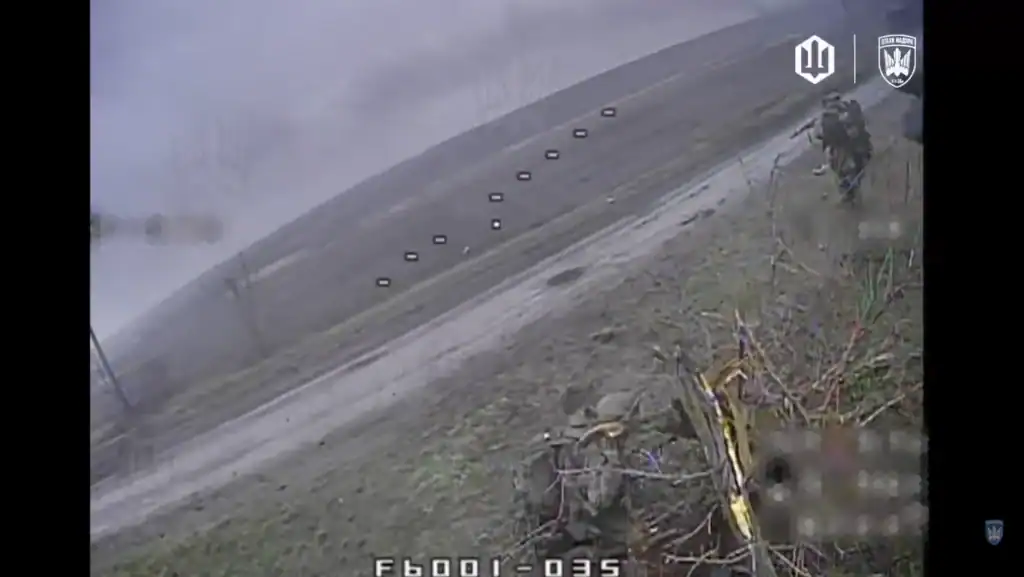
Source: MAGYAR
Brave1 Dataroom provides millions of real frames: FPV attacks, thermal images of Shaheds, data from ground-based complexes in those languages in which the new AI-based system will actually have to work and survive. Algorithms not only get used to the difficulties in practice, but also learn to recognize targets in conditions of severe visibility restrictions, electronic suppression, etc. It will even be able to independently make decisions exactly where classic radio-controlled drones lose contact and simply fall without result.
The process in stages looks like this:
- Military data collection.
- Annotation (markup of objects).
- On-edge AI training (directly on the drone).
- Testing and validation in a secure environment with live error correction.
The result is autonomous drones and robots that operate even without a satellite signal or radio communication.
Autonomous Drones 2026: From FPV to Fully Independent Systems
Today, FPV drones are the foundation, but they will evolve in 2026. Fiber-optic drones provide stable communication, machine vision + on-edge AI allow you to operate in a “fire and forget” mode.
Autonomous drones in Ukraine in 2026 will learn on their own:
- find the target by visual cues.
- Work in a swarm (swarm intelligence).
- Intercept enemy UAVs without an operator.
AI drones of the future will not depend on GPS or radio communication – this is what makes them resistant to Russian electronic warfare and an invincible weapon when used on a large scale.
Ground-based robotic systems (GROS) and their role in the future war in Ukraine

The developments in combat work with enemy manpower are not new, because within the 3rd assault brigade there is even a separate unit for eliminating enemy manpower using ground robotic complexes (GRCs) that are still controlled remotely, so the way Ukraine trains AI on combat data is not just an approach, but a real practice of application in the near future. The use of robots every day both in the sky and on the ground gives an advantage in knowledge of technologies not only on paper, which is not yet available in any country in the world.
In parallel with aerial drones, ground-based robotic NRC complexes are rapidly developing, which also involves their AI configuration in the future . Thus, as of 2025 and 2026, Ukrainian NRC units performed over 7,000 missions, mainly consisting of logistical tasks, evacuation of the wounded, and partly assault and mining of positions.
Currently, NRCs perform four key tasks that AI can take over in the future if trained on the same camera recordings:
- Logistics (delivery of ammunition and food without risk to fighters).
- Evacuation (removal of wounded under fire without an operator, communication based on own terrain data and compass).
- Assault (with an AI combat module without human participation).
- Engineering work (mine clearance, trenching in difficult and particularly dangerous areas of the front).
NRC operators are already becoming a separate specialty. These complexes are changing the architecture of combat: where people used to die, machines now work. In 2026-2027, Ukraine is expected to massively scale up. It is planned to create even new companies, or even battalions of NRC in the future.
Electronic warfare vs. autonomous systems: how Ukraine and Russia are preparing for a “war without communication”
Unfortunately, we are not the only ones trying to move technologies; Russia’s adversary is also actively switching to autonomous drones and drones with machine vision and intelligence, and inertial systems, in order to bypass classic electronic warfare.
Therefore, the key issue in the battle of technologies is advanced Ukrainian electronic warfare 2026:
- Compact mobile complexes for protection.
- Integration with sensors and air defense in real time and with AI technology.
- Asymmetric responses (cyber + impulse strikes on production).
EW vs. AI Drones 2026 is already “post-EW.” Drones with machine vision do not depend on radio, so Ukraine is preparing to combine electronic warfare against cyberattacks and “smart” air defense.
Expert predictions for 2026
Robert Tollast (RUSI) , one of the leading drone experts, notes that Ukraine has become a laboratory for the world. He predicts that autonomous systems will significantly increase the effectiveness of interception, but require time for integration.
Mykhailo Fedorov repeatedly emphasizes: by the end of 2026, AI drones and NRCs will become widespread. Ukrainian deftech analysts predict that autonomy will reduce losses by tens of % in logistics, defense, and assaults.
What are the Benefits and Risks for Ukraine as a “pioneer”?
We have described the advantages in detail and in depth in this material above, but let’s summarize briefly:
- Real data gives an advantage over simulations, so the result will be as close as possible to human involvement or even surpass it in many ways.
- Rapid scaling (Brave1 + state). This is not just about one single technology, it is a core that can be planted in any sector of defense, logistics, evacuation, etc.
- Less personnel losses, and the absence of the human factor (fatigue, need for replacement, difficult working conditions).
Risks that are not so obvious but exist:
- Scaling up production at the enemy and copying technologies.
- Ethical issues (working as killers).
- Dependence on data (currently the system does not work on its own, data needs to be constantly collected and updated to reflect the realities on the battlefield).
Ukraine is already addressing these issues.
How will this affect regular military and civilians?
For the military: fewer risks during logistics and evacuation, in the future during assault and participation in battles. New professions and technologies in the world that can be spread – technologies, AI analyses, data analysts.
For civilians: Brave1 technologies may eventually be transferred to the civilian sector (medicine, rescue operations). But the ethical issues of autonomous weapons require public discussion.
Conclusion + forecast: will AI be the key to winning the war?
AI on the frontline 2026 is no longer the future — it is a reality. Ukraine, thanks to Brave1 Dataroom and autonomous drones, Ukraine 2026 has created a unique advantage. By the end of the year, we hope to see the mass use of fully autonomous interceptors and NRCs in logistics.
AI will definitely not be the “winner” of the war, it will be won by people, AI itself is a technology, a means and a tool in the rivers of man, but with a certain perfection it will significantly accelerate Ukraine’s victory. It will not only allow us to do the main thing (reduce losses), but will also increase accuracy and change the war to a completely different plane – a war of technologies.