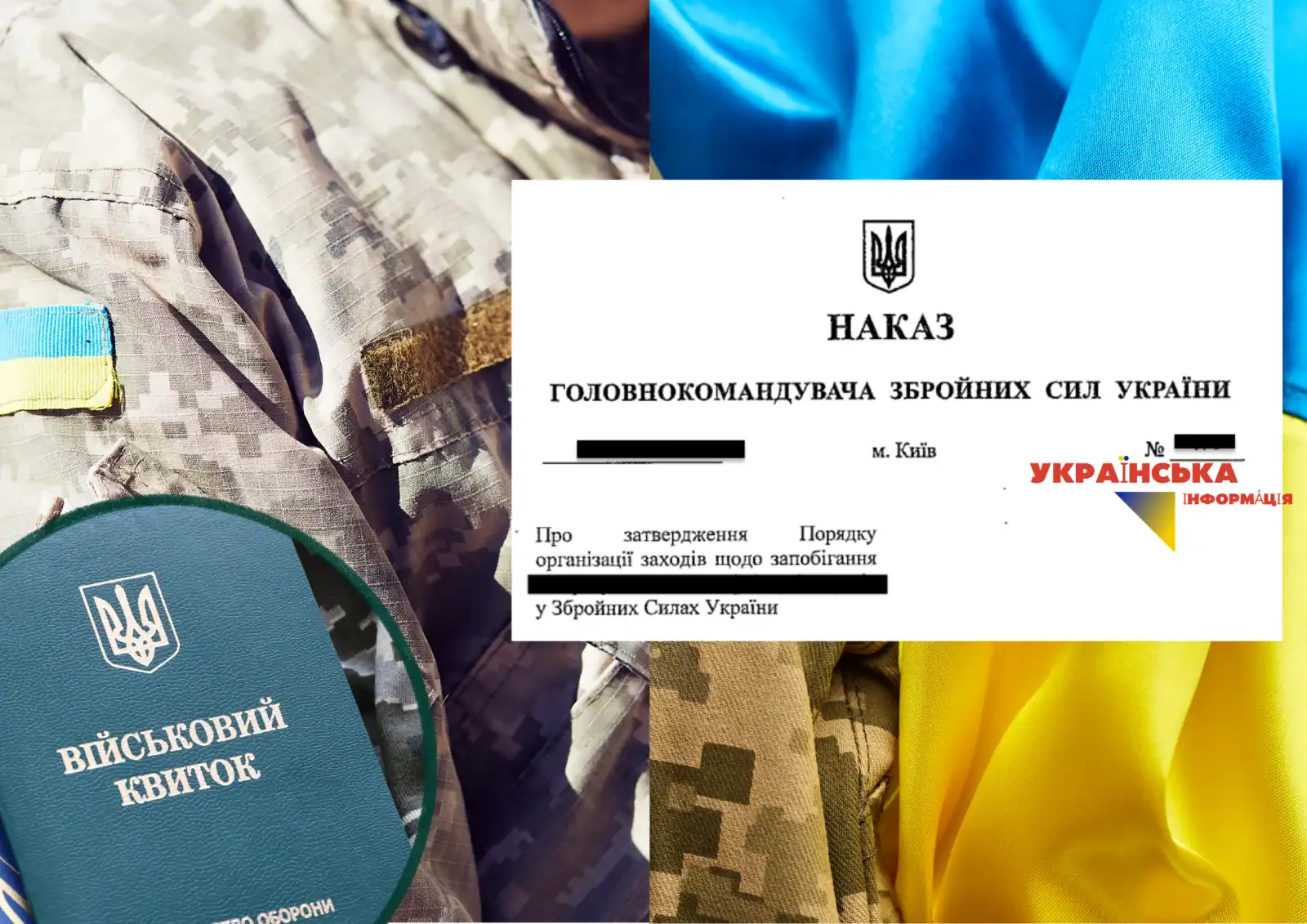
The Commander-in-Chief of the Armed Forces of Ukraine has approved a new, significantly simplified mechanism for the return of servicemen after voluntary abandonment of a unit (SZCh), and has also optimized the process of their transfer to new positions. The main innovation is the abolition of unnecessary bureaucratic links and the transition to direct communication between military units and the General Staff.
In this article, we analyze in detail how the new algorithm for returning to service will work for those currently in the NWCH under the new procedure from April 2, 2026, and what will change for the servicemen themselves in the procedure.
No unnecessary instances: a new document submission mechanism

The problem of returning to new positions after the SZCH by servicemen arose due to the complex bureaucratic process and multi-level instances of document approval, accordingly, the very moment of expressing a desire to return to service and the final stage of appointing a serviceman to a position in the share to which he wished to return was delayed for months. Only because of the need to coordinate documents at several levels.
With the new changes, the Commander-in-Chief of the Armed Forces of Ukraine decided to exclude all intermediate links from this chain in order to reduce the time of the entire procedure for approving the return of a serviceman from the Armed Forces of Ukraine.
From now on, when processing the documents of a candidate for a position with the status of someone who has voluntarily left the unit or place of service, the following will be omitted :
- Army Corps;
- Operational Commands (OC);
- Command of military branches, etc.
Documents for the appointment or transfer of a serviceman are submitted directly from his military unit to the General Staff of the Armed Forces of Ukraine .
How will this work in practice?
This decision is intended to speed up personnel processes in units, making them as transparent as possible, and finally eliminate the possibility of manipulation by individual commanders at the field and levels of command of troops, operational command, or army corps – who, as practice has previously shown, sometimes “artificially” impeded the transfer of soldiers to a new place of service in every possible way.
Have the conditions and criteria for return changed after the NWCH?
From a legal point of view, the basic conditions for return after a successful desertion and the amnesty of responsibility for returning to service after the first unauthorized desertion from the unit remain unchanged.
However, the General Staff emphasizes that the introduction of a new mechanism is aimed at preventing cases that arise on the ground based on feedback from the military themselves.
It is claimed that by eliminating a certain level of bureaucracy, the army thereby encourages return from the NWCH by offering a more democratic and rapid approach to the transfer of a serviceman to the desired military unit. It is expected that the ability to legally and without obstacles change the place of service should significantly reduce the number of cases of NWCH caused by conflicts or the inability to transfer through the standard route.
Electronic letters of recommendation and their limitations
Another important change concerns letters of recommendation (so-called “references”) . Now this document for a desired position in another military unit becomes purely electronic , which makes it impossible to lose or ignore paper documents.
However, the General Staff introduced a strict precautionary rule: letters of recommendation cannot be used as a loophole to avoid combat .
Electronic “relationships” will not work for transferring from combat brigades performing tasks in the hottest areas of the front to rear military units with more comfortable service conditions .
This tool, as explained, is “intended to strengthen units with specialists, not to drain personnel from the front lines . ”
Conclusions – reducing bureaucracy that harms the military
Optimizing work with SZCH and transfers – by reducing the links of approval and introducing electronic relations, this is only part of a broader strategy to reduce “harmful” bureaucracy for the military and a real step towards meeting the military with their problems that often arise during service or return to service after SZU.
The General Staff of the Armed Forces of Ukraine is already implementing measures to globally reduce document flow in military units. First of all, this concerns the processing of materials, orders, and instructions on the transfer of personnel. The goal of these reforms is to minimize the time required to make personnel decisions and free commanders from unnecessary paperwork.